
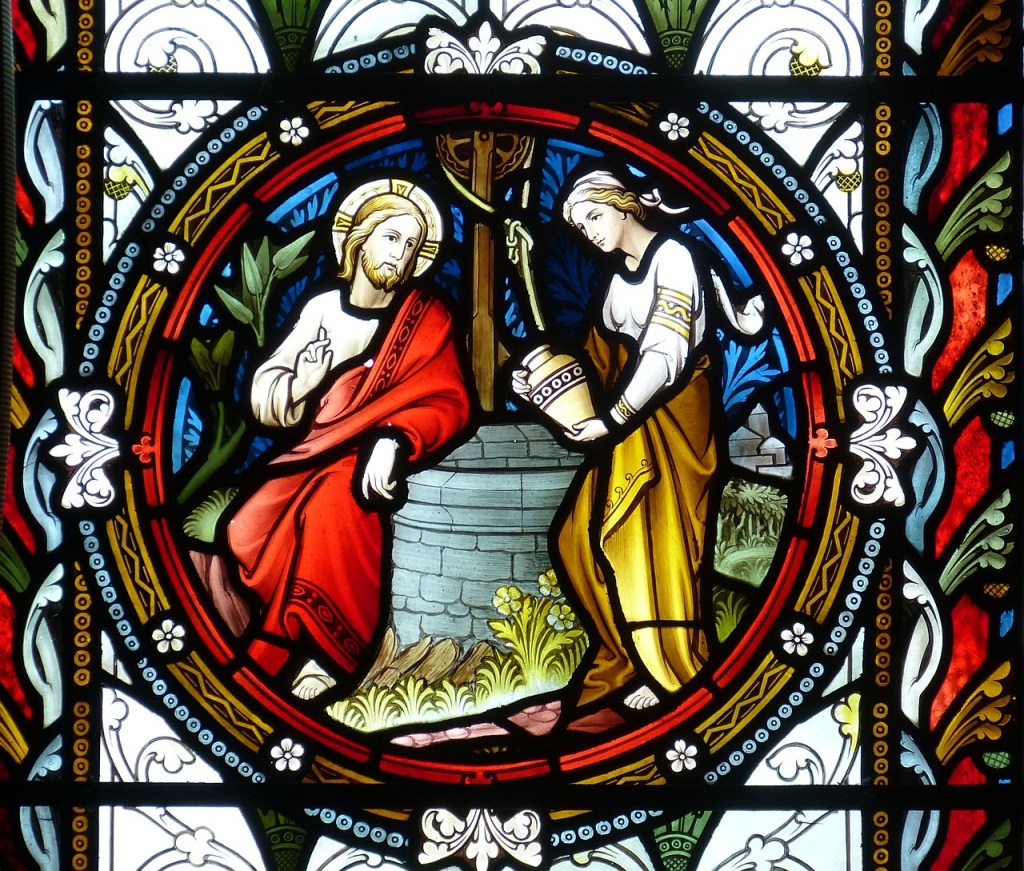
A study of John 4:7–9
“A woman from Samaria came to draw water. Jesus said to her, “Give me a drink.” (For his disciples had gone away into the city to buy food.) The Samaritan woman said to him, “How is it that you, a Jew, ask for a drink from me, a woman of Samaria?” (For Jews have no dealings with Samaritans.)”
John 4:7-9 ESV
Definitions of the original language in the context of this passage:
-Woman: “gynē”, “γυνή”; feminine noun — a woman of any age; as a form of address, may be used either in admiration (Matt. 15:28) or indignation (Luke 22:57), or in kindness or favor (John 4:21; Luke 13:12), or in respect (John 2:4).
-Samaria: “Samareia”, “Σαμάρεια”; proper locative noun — Samaria = ‘guardianship’, a territory in Palestine which had Samaria as its capital.
-To Draw: “antleō”, “ἀντλέω”; verb — properly: to draw out a ship’s bilge-water, to bale or pump out. Universally: to draw water.
-Water: “ydōr”, “ὕδωρ”; neuter noun — water.
-A Drink: “pinō”, “πίνω”; verb — to drink.
-Disciples: “mathētēs”, “μαθητής”; masculine noun — a learner, disciple, pupil.
-Had Gone Away: “aperchomai”, “ἀπέρχομαι”; verb — to go away from a place, to depart.
-City: “polis”, “πόλις”; feminine noun — a city; In John 4:8: the city of Sychar, capital of Samaria.
-Buy: “agorazō”, “ἀγοράζω”; verb — to buy (properly, in the marketplace).
-Food: “trophē”, “τροφή”; feminine noun — food, nourishment.
-Dealings: “sygchraomai”, “συγχράομαι”; verb — to associate with, to have dealings with.
Observation/Summary (short explanation of what the passage says in your own words):
As Jesus sat down by Jacob’s well in Samaria near the city of Sychar, a Samaritan woman came to draw water. Jesus was tired and thirsty from his journey so He asked the woman to give Him a drink because His disciples had all gone into the city to buy food. In response, the woman asked how He, being a Jew, could ask her, a Samaritan woman, for a drink of water because Jews and Samaritans had no dealings with each other due to deep rooted historic animosity.
Implication (what does this mean to us):
This passage is the beginning of a conversation between Jesus and a woman from Samaria. John the gospel writer intentionally placed this conversation right after Jesus’ conversation with Nicodemus in this gospel account. We are meant to see the contrast between Nicodemus, a pious, influential Jewish ruler and teacher of God’s Law, and this Samaritan woman who was performing menial labor during the hottest part of the day. Nicodemus would have been considered to be the absolute ‘cream of the crop’ in Jewish Society, and this woman from Samaria would have been viewed as the lowest of the low. We will see that Jesus addresses her perhaps a little differently than Nicodemus, but no less lovingly. For every contrast we see between this woman and Nicodemus, we can see similarities in the way Jesus speaks to them and in what he tells them.
The form of the message may alter slightly, but the content remains the same: Jesus loves everyone from every nation, ethnicity and social class, and whether a person is from the upper classes of society or the absolute gutter, all people stand condemned before God for sin. But all people have also had the same great salvation that is obtained by grace alone through faith alone in Jesus offered to them. Where we see societal and ethnic differences, Jesus sees people equally and desperately in need of Spiritual rebirth through faith in Him. We will also notice how Jesus starts with a seemingly abstract concept, and then slowly expands on it while in conversation to help the person He talks to understand Him. With Nicodemus, He started with our need to be “born again,” and with this woman He will begin, in verse 10, by telling her about the ‘living water’ only He can supply.
There are some interesting details provided about when and where this meeting took place that would have been immediately obvious to a 1st century person, but not so obvious to us today. From verse 6, we are meant to notice this woman came to draw water alone during the hottest part of the day (sixth hour = 12:00 pm) and ask why she would do this. The task of drawing water would primarily have been done by women in this culture and society, but typically the women would have gone to draw water in groups, in the earlier, cooler part of the day. It is possible this woman came at this time because an unexpected need for water arose, but it is also likely she came alone at this part of the day to avoid the other women because she was a social outcast for some reason.
This is the scene: It is hot. The sun is bearing down, and Jesus, tired from His journey, was too weary to go with His disciples into the city to buy food, so He sat down by the well to rest alone while He waited for them to return. Tired as He was from His journey though, He had nothing that He could use to draw water from the well. He of course could have miraculously provided Himself with water or a vessel to draw water, but instead He sat down and waited. Then, a woman from Samaria appeared. She was likely sweating and breathing heavily from the exertion of walking to the well in the heat of the day, and as she approached she would have seen a road weary Jewish man sitting alone by the well. She likely came to the well at this time of day because she thought no one would be there, but she needed water so she pressed on to the well, probably keeping a watchful eye on the strange man who sat there all alone.
When she got to the well Jesus said to her, “Give me a drink.” This sounds like a command in English, but it is better understood as a polite, friendly request. Near-Eastern hospitality being what it was and is, it is not presumptuous to assume hospitality from a stranger when in their land or home. But this is also another detail we might read over without taking note of its significance. Jewish Rabbis at this time would never speak to women in public, not even their own wives. Jewish people in general would also never have asked for water, food, or anything else from a Samaritan. We now see Jesus is not only interacting with a Samaritan, but also a woman. These simple details alone also surprised the Samaritan woman which is why she asks Him why He would ask her for a drink. It was not difficult for her to understand that He was thirsty and needed water, but it was difficult to understand why He would ask her, a “Samaritan woman” for water.
From this request we see more of the fullness of Jesus’ humanity. In verse 6 of this chapter we read Jesus was “wearied,” or we might say “exhausted” from His journey. And here we read He was also thirsty and in need of something to get the water out of the well. Jesus could have used miraculous means to get the water, but just like the wedding at Cana, He requested human participation to fill vessels with water. God never needs us to accomplish anything, but He chooses to use us. And He also chose to become needy in these human ways in order to fulfill our great need to be restored to relationship with Him. In coming to us and this Samaritan woman in this way, needy and asking for our cooperation, He displays His humility, love and grace with the utmost profundity. Our glorious and gracious Savior, the One from whom flows streams of living water, became thirsty for us. The One who provides the eternal, satisfying rest our souls crave, became weary for us. And He condescended from the throne room of heaven to sit, wearied, hot and thirsty by a well, in order that He might ask this lady, who had likely been ostracized by her society, for a drink of water so that He could give her living water.
The woman’s question to Jesus in verse 9 probably carries a tone of surprised friendliness. She would not have known what to expect as she walked tentatively towards the well where a strange Jewish man sat all alone. Rather than ignoring her or treating her as worthless, He asked her for help. At this request she likely gave him a drink of water and then asked in a friendly way, “Why do you ask me for water? Jews never have any dealings with Samaritans.” This man intrigued her. He is clearly different from everyone else. The reigning Jewish religious authorities despised people like her, but as we learned from Jesus’ conversation with Nicodemus: He is different. He would not shun her for being a Samaritan or a woman. Jesus is showing what true religion is in the sight of God: love and compassion for all people. This meeting, just like the meeting with Nicodemus, is meant to show us that Jesus is different.
Application (How does this change how I think, act and pray?):
From this passage we learn Jesus understands the weariness and pain we experience because of His own personal experience. He did not have to experience any of this, but He willingly came to earth as fully God and fully man because of His love and to display His unrivaled glory. This should cause us to think of Him as able and eager to sympathize with us in whatever we are going through. From His example we should also learn to show compassion to others in the middle of their weariness and pain.
We also learn Jesus loves all people no matter where they are from or what they have done. He does not hold back on speaking the truth, but He always does so with love and grace. Because of His selfless love for all people, we who follow Him should also love and care for people no matter where they are from or what they have done. As we think of this example of selfless love, we should pray for Jesus to help us love others like He does in both word and deed.
Self Reflection:
What does the fact that Jesus left the perfect splendor of heaven to experience the indignities of human weariness, thirst, and much more tell me about His love for me?
How does the example of Jesus’ love for all peoples of the world inform my understanding of how I am called to love?
Is there anyone or any group of people I do not love like Jesus loves? Have I confessed this to the Lord in prayer and asked Him to flood my heart with love for them?
 Home
Home 
Leave a comment