
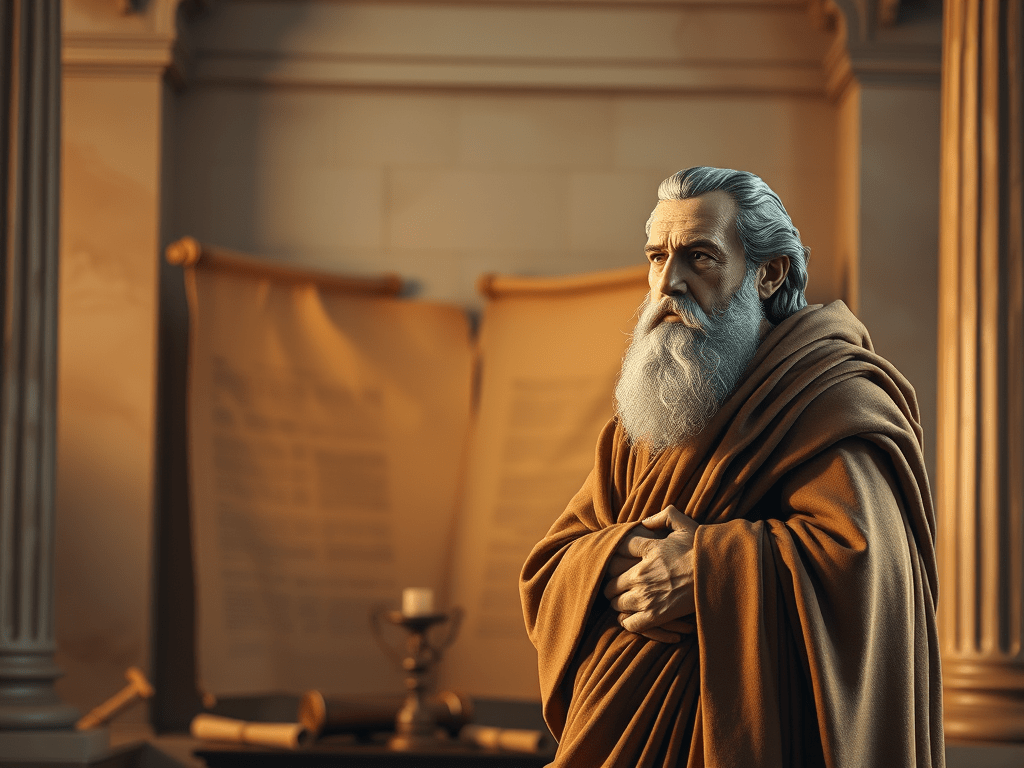
A Study of Titus 1:10-16
“For there are many who are insubordinate, empty talkers and deceivers, especially those of the circumcision party. They must be silenced, since they are upsetting whole families by teaching for shameful gain what they ought not to teach. One of the Cretans, a prophet of their own, said, “Cretans are always liars, evil beasts, lazy gluttons.” This testimony is true. Therefore rebuke them sharply, that they may be sound in the faith, not devoting themselves to Jewish myths and the commands of people who turn away from the truth. To the pure, all things are pure, but to the defiled and unbelieving, nothing is pure; but both their minds and their consciences are defiled. They profess to know God, but they deny him by their works. They are detestable, disobedient, unfit for any good work.”
Titus 1:10-16 ESV
Observation/Summary (short explanation of what the passage says in your own words):
The apostle Paul wrote to Titus and told him that in Crete there were many insubordinate, empty talkers, especially those of the circumcision party who needed to be silenced because they were upsetting whole families by teaching what they shouldn’t in the church for shameful gain. Apparently, a prophet from Crete even said, “Cretan are always liars, evil beasts, lazy gluttons,”; this, Paul said, was true of such disruptors. So, he told Titus to rebuke them sharply so that they could be sound in the faith instead of devoting themselves to Jewish myths and the commands of people who turned away from the truth.
Paul then went on to say that to the pure, all things are pure, but to the defiled and unbelieving, nothing is pure, but rather, their consciences and minds are defiled. They say they know God, but they deny God with how they live. “They are detestable, disobedient, unfit for any good work.”
Textual Analysis and Implication (what is being said and what does this mean?):
Paul wrote this letter to Titus to instruct him to select and establish elders (a.k.a. pastors) in the newly formed churches on the island of Crete. In this section of the letter, Paul warned Timothy about false teachers who were disrupting the church and told him how to respond to them and why.
In verse 10 Paul began to say there were many who were insubordinate. The Greek word translated as insubordinate is the opposite of submit, so, there were many who would not submit to God’s authority and order in the church. God is a God of order and there are multiple areas of life where He has established order, such as in the home, nation states, the workplace and the church. When we recognize God ordained authority and honor that authority, we honor God. When we dishonor that authority, we dishonor God. If such insubordinate people existed in Paul’s day among God’s people, then they still exist today. We should examine ourselves lest we be found among them.
There were also “empty-talkers” and “deceivers” that Paul warned Titus about, “especially those of the circumcision party.” Empty-talkers and deceivers are those who engage in foolish speech of no substance and often outright lies. Such talk does nothing to build up or encourage others in faith and godliness. At this time Paul was also worried about the Christians from a Jewish background who wrongly believed and taught that Jewish laws and customs needed to be added to the faith in order to be truly accepted by God. These people believed keeping the law of Moses was a requirement of salvation. In so doing they taught, directly or indirectly, that faith in Jesus and His finished work on the cross was insufficient to save. But as we know from Ephesians 2:8-9 “For by grace you have been saved through faith. And this is not your own doing; it is the gift of God, not a result of works, so that no one may boast.”
Of such people, Paul told Titus, “They must be silenced, since they are upsetting whole families by teaching for shameful gain what they ought not to teach.” Titus was told to train elders to silence or shut up these defiant people within the church. They could leave or say whatever they might want outside the church, but within the church, where they had no authority, they must be silenced because with their insubordination they would upset or subvert entire households. Importantly, the way in which they are to be silenced is not by persecution or force of arms, but by reason, sound doctrine, and if necessary, expulsion from the church.
These kinds of people, in opposition to God given authority and doctrine, teach what they should not teach for shameful gain. Respectful and private disagreement is one thing, but open, public defiance is another. False doctrine, insubordinate examples and unprofitable things (from a godly perspective) should not be taught in the church. The shameful gain these people seek could be financial, but it can also often be emotional gain, seeking acclaim and praise or trying to selfishly build a following for the purpose of self exaltation. As David Guzik puts it, “They serve for the sake of the gain that comes when others recognize or admire them as a spiritual leader.”
Next, in verse 12 Paul quoted a prophet from Crete who said of his own people, “Cretans are always liars, evil beasts, lazy gluttons.” By saying “prophet,” Paul did not mean the man was an inspired prophet of God, but that in this one thing at least he spoke true. In fact, because of this well known fact about the Cretans, the Greeks formed the verb “kretizein,” which meant to lie and to cheat. And this means the people of Crete in general had a reputation for these serious character deficiencies. However, Paul did not tell Titus this in order to tell him to treat them badly or stay away from them. On the contrary, Paul told Titus this as a way of expressing the desperate need this people group had for receiving the gospel of Jesus Christ from capable church leaders so that they could grow and be discipled in the ways of Christ for their good and Christ’s glory.
Then, in verses 13-14, after averring the testimony of the aforementioned Cretan prophet to be true, Paul told Timothy, “Therefore, rebuke them sharply, that they may be sound in the faith, not devoting themselves to Jewish myths and the commands of people who turn away from the truth.” Because there was by and large ungodly character even amongst the new Cretan Christians, Paul instructed Titus to rebuke them sharply and directly; and also to raise up elders who would do the same. These character deficiencies in Crete exist in the heart of all humans, so elders in every time and place need to be prepared to do the same when necessary.
One particular issue in Crete though was the spreading of Jewish myths. This was previously referred to in verse 10 as “those of the circumcision party.”. Jewish legalism was a specific contentious issue in these churches and Paul said it needed to be dealt with directly. These people were not basing their teaching on God’s Word, but on “the commands of people who turn from the truth.” They were taking the law of Moses and using it to preach a works based salvation that runs contrary to the true gospel of salvation that is only by grace through faith.
In response to the legalism taught by these people Paul said, “To the pure, all things are pure, but to the defiled and unbelieving, nothing is pure; but both their minds and their consciences are defiled.” The people Paul directed Titus to confront believed that “nothing is pure.” They called many things sinful that were not sinful; the good God given pleasures of life. Paul warned Timothy against the same kind of people in 1 Timothy 4:3 saying they were those who, “forbid marriage and required abstinence from foods that God created to be received with thanksgiving by those who believe and know the truth.” For those who walk faithfully with God, these good things are pure, but to those with ungodly, defiled and unbelieving consciences, these things seem impure. The problem though is not these good God given things, the problem is their defiled and impure hearts and minds.
Importantly, when Paul said all things are pure He did not mean obviously sinful things are pure. Paul was speaking of things that are not forbidden by God in Scripture, but that these legalists were forbidding in a mistaken attempt to earn God’s favor. One such example is that these Jewish teachers were still teaching the old dietary restrictions and saying they still applied to believers. In addition to this they also taught against things like marriage, rest and recreation.
Lastly for this chapter, Paul said such people “profess to know God, but they deny him by their works. They are detestable, disobedient, unfit for any good work.” This is intentionally harsh language from Paul. He had a serious point to get across and he meant it. These rebellious and contentious people presented themselves as having a greater spirituality than Titus and the godly leaders he would be raising up, but in reality their spirituality was a sham and did not honor God. Paul wanted Titus and the other Cretan believers to be aware of this.
In addition to being disobedient, Paul said they were detestable, which carries the idea of being polluted by idolatry. He also said they were “unfit” for any good work. The word for unfit in the Greek is “adokimos,” and this word was used in a variety of ways. Adokimos was used to describe a counterfeit coin, a cowardly soldier in battle, a rejected political candidate, or a stone rejected by builders because it contained too great a flaw. Essentially, these contentious, insubordinate and legalistic people presented themselves as paragons of godly virtue, but in reality they were frauds leading people astray and stirring up trouble, and Titus, and all church leaders, need to identify and deal with them for the sake of the welfare of God’s people.
Response (How does this change how I think, act and pray?):
For elders, the application of this passage is plain to be seen; insubordinate, contentious people stirring up strife in the church and teaching false doctrines need to be swiftly dealt with for the sake of the faith and welfare of the body of Christ. But for all of us, this harsh passage provides cause for self reflection. Our leaders will give an account to God for how they shepherd the flock, but we will also give an account for our part in following our leaders. Obviously, we only follow them insofar as they imitate Christ and are faithful to the Word, but are we faithful to the Word? Do we serve and share for the right reasons, or for shameful gain? Do our works deny or affirm Christ? Works do not save us, and none of us are perfect, but out of our love for and believing loyalty to Jesus, we can and should endeavor to live God honoring lives that strengthen and build up our leaders and fellow Christians for their good and Christ’s glory.
Self Reflection:
- Does my life and actions in the church serve to build up and encourage others?
- What is my motivation for serving in the body?
- Am I able to be humble when rebuked and reflect on my own actions? Or am I too easily offended to receive instruction?
 Home
Home 
Leave a comment