
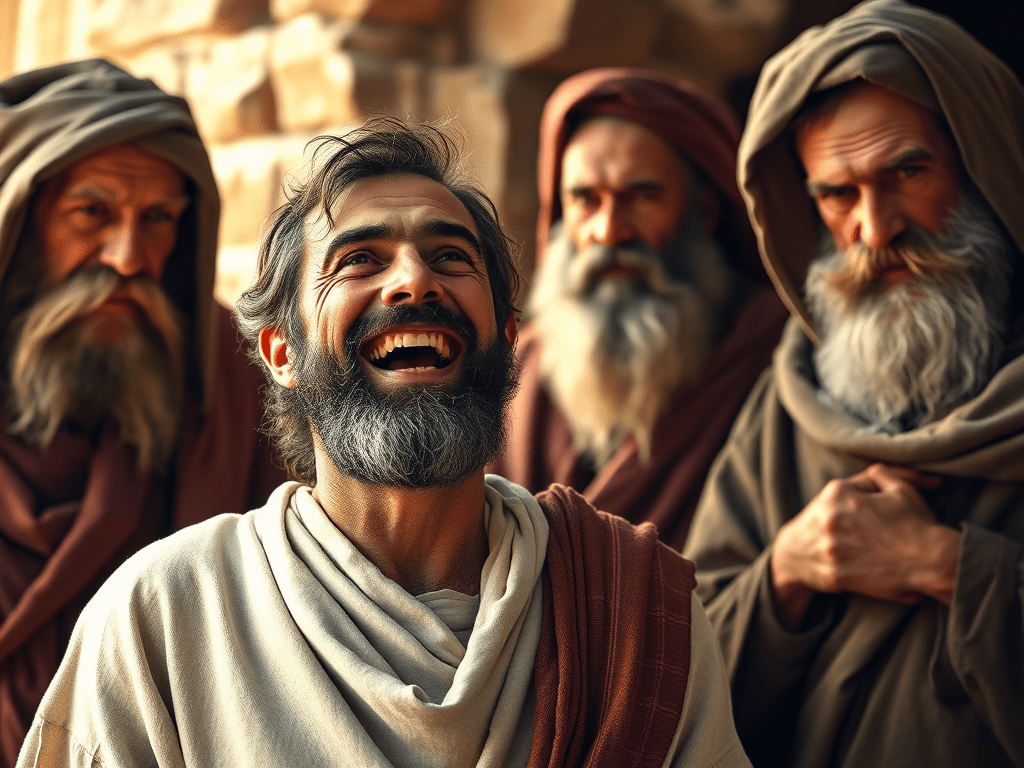
A Study of John 9:24-34
“So for the second time they called the man who had been blind and said to him, “Give glory to God. We know that this man is a sinner.” He answered, “Whether he is a sinner I do not know. One thing I do know, that though I was blind, now I see.” They said to him, “What did he do to you? How did he open your eyes?” He answered them, “I have told you already, and you would not listen. Why do you want to hear it again? Do you also want to become his disciples?” And they reviled him, saying, “You are his disciple, but we are disciples of Moses. We know that God has spoken to Moses, but as for this man, we do not know where he comes from.” The man answered, “Why, this is an amazing thing! You do not know where he comes from, and yet he opened my eyes. We know that God does not listen to sinners, but if anyone is a worshiper of God and does his will, God listens to him. Never since the world began has it been heard that anyone opened the eyes of a man born blind. If this man were not from God, he could do nothing.” They answered him, “You were born in utter sin, and would you teach us?” And they cast him out.”
John 9:24–34 ESV
Observation/Summary (short explanation of what the passage says in your own words):
The Pharisees called the man who was born blind and had been healed by Jesus and told him to give glory to God because they thought Jesus was a sinner. The man responded that he did not know if Jesus was a sinner, but he did know that once he was blind but now could see. The Pharisees then asked the man, again, what Jesus did to him. The man, after being asked the same questions just because they did not like the answers, said that he already told them what happened, and then asked why they wanted to hear it again. Did they want to become disciples of Jesus as well?
Hearing this, the Pharisees reviled him and said he was a disciple of Jesus, but they were disciples of Moses. They believed God spoke through Moses, but not through Jesus, and they said they did not know where Jesus came from. The man answered them and said this was an amazing thing, because they knew that God does not listen to sinners, but does listen to those who worship Him and do His will. The man also added that since the beginning of the world no one ever heard of a person born blind receiving their sight. Therefore, the healed man concluded, if this man Jesus were not from God, then He could not have done this miraculous deed. In response to this the Pharisees told the man he was born in utter sin, and they would not be taught by him. Then they cast him out.
Textual Analysis and Implication (what is being said and what does this mean?):
In the verses previous to this passage, Jesus healed a man who was blind from birth on the Sabbath. The people from the surrounding area were astonished and took the man to see the Pharisees, the Jewish religious leaders. Instead of being amazed at the power of God displayed in the healing of this man, they were upset he had been healed on the Sabbath. Jesus’ healing of the man did not violate the true Sabbath law given by Yahweh through Moses, but it did violate the man-made traditions the Pharisees had added to the law which prevented medical treatment on the Sabbath except in the case of life threatening situations. Because of this, the Pharisees wrongfully decided Jesus must be a sinner and therefore could not have truly healed the man. They believed there was a conspiracy of some sort, but as they questioned the man, his parents and the other witnesses, they only found more evidence to confirm the truthfulness of the story. So, frustrated by the truth, in this passage we see them continuing their investigation.
In verse 24 we read that they called the formerly blind man for questioning a second time and told him, “Give glory to God. We know that this man is a sinner.” By saying, “Give glory to God,” they were imploring the man to tell the truth because they did not believe he had been telling the truth despite all of the corroborating eyewitness testimony they had heard. Even the testimony of the man’s parents, which did not acknowledge Jesus as the miracle worker, still confirmed that a miracle had taken place. The truth revealed to the Pharisees contradicted what they “knew” to be true. They had decided Jesus must be a sinner because He violated their man made laws which they had added to God’s law and had come to believe was God’s law. But Jesus’ words and behavior now challenged that assertion. Based on this faulty reasoning they concluded the man must have been hiding something, and they demanded that he confess and tell the truth. Of course he had been telling the truth to this point, but the truth was not to their liking.
In response to yet another round of questioning the man said, “Whether he is a sinner I do not know. One thing I do know, that though I was blind, now I see.” There was much the man did not know about Jesus, and he did not deny that. But what he did know is that he was blind for his entire life until he encountered Jesus, and now he could see. The Pharisees based their judgements of Jesus on the societal and religious beliefs they developed and grew up in, but the man based his judgement of Jesus on the evidence he had seen and experienced. The Pharisees had added to and twisted the word of God until they really only had a god of their own making, and now when faced with God in the flesh, they are finding out their version of God does not match up with the real thing and they are incensed. Whatever they might want to wrongly say or believe about Jesus, they cannot deny or refute the fact that yet another miraculous healing had been performed by Jesus and was attested to by many eyewitnesses.
The religious authorities had already decided Jesus was a sinner, but as they conducted their investigation, they found no evidence of sinful conduct. So, in a desperate attempt to find evidence to support their presupposition, in verse 26 the Pharisees covered the same material again and asked the man what Jesus did to him and how Jesus opened his eyes. Up until now the healed man had been polite and respectful, but now it became plain to see that the supposed judicial impartiality of the Pharisees was a total farce, and in verse 27 the man adopts a sardonic tone saying, “I have told you already, and you would not listen. Why do you want to hear it again? Do you also want to become his disciples?”. He had already given answers to all these questions, so there could be little point in the Pharisees asking them again except to try and trip the man up in his testimony.
Instead of continuing to play their game and go in conversational circles with them, the man asked a seemingly innocent, yet clearly ironic question, “Do they want to become followers of Jesus too?”. The point being, what possible reason could they have for going over this same territory again unless they sincerely wanted to know more about Jesus for the sake of following Him? Obviously the man knew they did not want this because everyone knew they had threatened to throw anyone who confessed Jesus to be the Christ out of the synagogue (John 9:22). So, with these questions the man made it clear that the Pharisees themselves were the only ones who thought their veil of judicial impartiality was anything more than a show.
When the man responded in this way the Pharisees became very angry and resorted to insulting him. It is very likely they were also responding to the man having seen through their questioning as little more than an attempt to trip him up in his words. The man’s sardonic question evoked a vitriolic response from the Pharisees that stripped away any remaining pretence of impartiality. And in their response the Pharisees claimed they were disciples of Moses, in contrast to this man who was a follower of Jesus. The Pharisees believed God spoke to Moses, but they said they did not know where Jesus came from.
The truly ironic thing here though is that while the Pharisees saw themselves as siding with Moses and the man as siding with Jesus, Moses also sided with Jesus. If they truly understood Moses’ writings they would have sided with Jesus too. But over the years something called the oral torah came about. This was where things like the extra Sabbath restrictions came from, and it is this oral torah, that effectively replaced or at least obfuscated God’s word, that the Pharisees clung to. But again, ironically, as they clung to this oral torah, this man made tradition, as Jesus said in an earlier encounter, they will eventually see Moses himself accuse them on the final day (John 5:45-46).
In verse 30 the man first responds saying, “Why, this is an amazing thing! You do not know where he comes from, and yet he opened my eyes.” As amazed as the man was by the miraculous healing of his sight, he was even more amazed at the Pharisees’ stubborn disbelief even in the face of this miraculous sign. Next, in verses 31-33 the man went on to say God does not listen to sinners, but does listen to those who worship Him and do His will. The Old Testament is full of passages that affirm God listens to those who fear Him. This fact, like the miraculous signs of Jesus, does not by itself fully confirm Jesus’ identity, but like the miraculous signs, it is one more significant piece of evidence. And the man used this piece of evidence to make his next point which was that the healing of a person born blind had never been heard of before, therefore if this “Man” were not from God, He could do nothing. The healed man may not have covered every theological jot and tittle, but his argument was simple and effective. Jesus just did what only God could do.
In response to this, the Pharisees let their reviling of the man be fully displayed as they said, “You were born in utter sin, and would you teach us?” and they cast him out. The Pharisees revealed how much they utterly despised the common man. And they were so angry to hear this truth which dismantled their preconceived ideas that they were unwilling to objectively evaluate the man’s statement or the testimony of the many other eyewitnesses. They came to the scene already wrongly convinced that Jesus was a sinner and that these people must have been part of a conspiracy of some kind. Ironically, they came to evaluate the claims that a man blind from birth had received his sight, but they were too blinded by their own pride to take in the miracle for themselves. And perhaps even more ironically, as they reviled the man and said he was born in utter sin, they revealed that they did believe he had been born blind, a fact they had been trying to refute with their incessant cross examinations. And this of course would leave room only to conclude that if he was born blind and could now see, then he must have been healed miraculously.
Importantly, they not only insulted and abused the healed man, they also cast him out of the synagogue. So, basically he was excommunicated and cut off from the community. This is precisely what his parents feared and had sought to avoid by distancing themselves from their son in verses 22-23. Although this must have been very difficult for the man to endure, we will see in the next passage that Jesus will come and welcome the man as one of his followers. To follow Jesus and remain loyal to Him will bring rejection from the world, but Jesus always cares for His sheep.
Response (How does this change how I think, act and pray?):
The bold witness of this man for Christ in front of the hostile religious authorities should cause us to examine how we testify of Christ in our set and setting. The man did not even know exactly who Jesus was yet, but he knew Jesus had healed his eyes and Jesus was from God. Once he learned this he did not back down from proclaiming the truth. Now, today we know Jesus is not only a teacher and healer sent from God, He is God. Will we be as bold as this man in testifying of Jesus to a hostile world? Who do we love and fear more? God or humans?
The stubborn, willful blindness of the Pharisees should also give us pause. The Pharisees showed themselves to be far more blind than the healed man ever was. They may have had their physical sight, but spiritually they were blind in all the worst ways. They had constructed certain ideas about who God is based on human traditions and once God showed up and did not fit in the box they made for Him, they refused to acknowledge Him as God. The spiritual blindness, this pride, blinded them with a blindness that would lead them to utter darkness and horror for eternity. Jesus is God Himself, the Light who came into the darkness of this world to open our eyes to behold Him and His righteous splendor. But He does not force us to see, or to trust in Him. The religious leaders made a prideful, sinful choice to reject Jesus and deny the evidence before their very eyes. We need Jesus to open our eyes in order to see Him and believe. And we still need Him daily to continue opening our eyes to see the parts of our lives where we are not like Him, and to see the people around us He is calling us to love. We must continually come to Christ so that we do not remain or become blind like the Pharisees.
Self Reflection:
- What are some practical ways I can testify of Jesus Christ in my life in both word and deed?
- Do I have trusted people in my life to help me see my own spiritual blind spots?
- What are my spiritual blind spots? What have they been in the past? I need to remember to pray and ask God to remove prideful blindness from me.
 Home
Home 
Leave a comment