
A Study of John 10:22-30
“At that time the Feast of Dedication took place at Jerusalem. It was winter, and Jesus was walking in the temple, in the colonnade of Solomon. So the Jews gathered around him and said to him, “How long will you keep us in suspense? If you are the Christ, tell us plainly.” Jesus answered them, “I told you, and you do not believe. The works that I do in my Father’s name bear witness about me, but you do not believe because you are not among my sheep. My sheep hear my voice, and I know them, and they follow me. I give them eternal life, and they will never perish, and no one will snatch them out of my hand. My Father, who has given them to me, is greater than all, and no one is able to snatch them out of the Father’s hand. I and the Father are one.””
John 10:22–30 ESV
Observation/Summary (short explanation of what the passage says in your own words):
In the winter, at the time of the Feast of Dedication, Jesus was in Jerusalem walking in the temple, in the colonnade of Solomon. Then the Jews gathered around Him and asked Him to speak plainly and tell them whether or not He is the Christ. Jesus answered them and said He had told them but they would not believe. The works He’d been doing in God the Father’s name bore witness to who He is, but they would not believe because they were not among Jesus’ sheep. Jesus knows His sheep, they hear His voice and they follow Him. Jesus also gives His sheep eternal life so they will never die and no one can take them from His hand. God the Father, who gave them to Jesus, is the greatest of all and no one can take them from the Father’s hand. Jesus and God the Father are One.
Textual Analysis and Implication (what is being said and what does this mean?):
The “Feast of Dedication” mentioned in verse 22 is also known as Hanukkah, and it was not a feast mentioned in the Hebrew Scriptures. This feast celebrated the rededication of the Jerusalem temple after a 3 year long desecration at the hands of the Syrian king, Antiochus Epiphanes (167-164 B.C.). This pagan Syrian king overtook Jerusalem and defiled the temple with abominable sacrifices, pagan altars to false gods and prostitutes. He also made possession of a copy of the Hebrew scriptures punishable by death, as was circumcising male Hebrew babies. In fact, under his evil regime, Jewish mothers who circumcised their babies were crucified with their child hung around their neck. All told, it is estimated about 80,000 Jewish people were killed during the brief, evil reign of this man.
Under the weight of this oppression, the Maccabees, led by Judas Maccabaeus (‘Judas the Hammer’), were able to revolt and eventually overthrow the tyrannical Syrian king. When they recaptured the city of Jerusalem, they reconsecrated the temple to Yahweh, the one true God, on 25 Kislev 164 B.C., the month that corresponds to December on the calendars we use today. As they rededicated the temple, the people celebrated with a feast for 8 days, and it was decided that the same feast should be held every year. This feast is called the Feast of Dedication (Hanukkah), but it was also referred to as the Feast of Lights because the people would light lamps and candles in their homes to celebrate the time when the ability to worship God returned to them when they did not expect it.
John mentions it was the time for this festival celebration to provide a chronological marker as he continues the narrative. And John also presents yet another festival celebration in this gospel account to once again present Jesus as the Son of God who is the ultimate fulfilment of such celebrations.
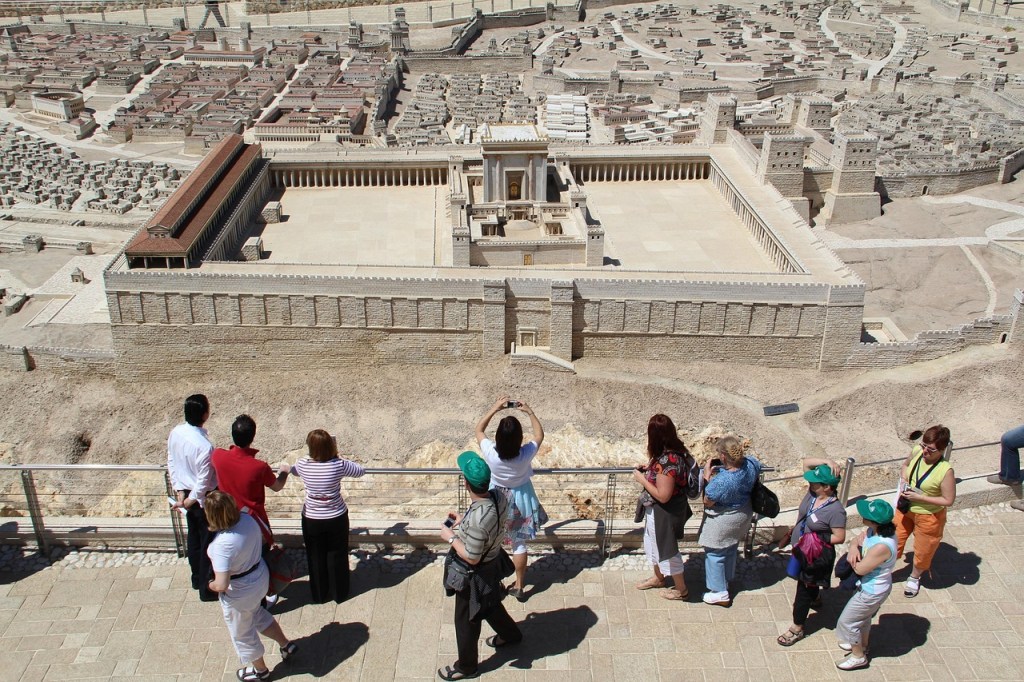
John the gospel writer also tells us it was winter. He likely added this detail to provide context for the next sentence in verse 23 which says, “Jesus was walking in the colonnade of Solomon.” The colonnade of Solomon was a covered porch on the eastern side of the temple as opposed to the central, open temple court. The cover provided in Solomon’s colonnade would have given some shelter from the cold and inclement weather of winter. This detail would have been significant to the earliest believers in Jesus because Solomon’s colonnade was where the first believers congregated to publicly declare the resurrected Jesus to be the long awaited Messiah.
Next, John tells us that as Jesus was walking here, the Jews gathered around Him and said, “How long will you keep us in suspense? If you are the Christ, tell us plainly.” The text tells us Jesus was simply walking in the temple, not teaching. So, this encounter describes a contentious ambush wherein this group of Jews were not sincerely seeking the truth about Jesus’ identity, but rather, they were seeking to provoke some kind of unambiguous statement which they could use to attack Jesus, be it with mob violence or legal injunction. They wanted Him to publicly and explicitly declare Himself to be the Messiah. While Jesus did more clearly reveal His Messianic identity in smaller circles, such as to the Samaritan woman at the well, and to His closer circle of disciples, He refrained from doing so on a public stage. This is because the term “Messiah” or “Christ” (the Greek word for Messiah) had not only religious, but also political and military connotations to the people of 1st century Palestine.
The Jewish people were expecting the Messiah to come as a conquering military and political figure. They did not understand that first the Messiah must suffer and die (Isaiah 53). For this reason Jesus was always very careful about how He described His identity. In fact, in John 6:15, Jesus dispersed and sent away a crowd of people who wanted to make Him king by force because He came to suffer and die for our sin in His first coming. It is only in His second coming that He will arrive with an army to conquer the Earth. Importantly, even if Jesus had explicitly stated Himself to be the Messiah to this hostile group of unbelieving Jews, they would not have believed Him. They did not want the true Messiah. They wanted a Messiah of their own making who they could control and use to shore up their own little man made power structure. However, John’s gospel account gives ample evidence that the way Jesus did communicate His Messiaship and Divinity is more than sufficient to draw those who will believe to Himself, even to this very day (John 20:30-31).
For those given ears to hear and eyes to see, the way Jesus spoke, the miracles He performed, the way He explicated the Old Testament, and how He described the relation between Himself and God was more than enough to show He is the Messiah. For example, His description of Himself as the Good Shepherd in the verses previous to these is one of many examples of how Jesus clearly explained who He is without making a statement that could be misconstrued as calling for a military campaign against Rome. The hostile, unbelieving crowd though, came to Jesus and told Him to speak “plainly” because they wanted Him to use language that would be sufficient for them to arrest and convict Him of fomenting rebellion against Rome or of committing blasphemy. While Jesus will not oblige them, we will see Him continue to make the same point in the following verses, which is, He is the Son of God, Yahweh incarnate.
In response to the hostile questioning leveled at Him, Jesus began to answer in verse 25 by saying, “I told you, and you do not believe. The works that I do in my Father’s name bear witness about me…”. By using the words, “I told you,” Jesus is not saying He explicitly stated His Messianic identity because, again, they would have misunderstood Him. They did not understand the Messiah must first come as a suffering servant. They thought the Messiah would be a conquering military/political figure who would overthrow Rome. And if Jesus had tried to explain to them how the Messiah must suffer they would have mocked Him for a fool judging by how even His own disciples, such as Peter, opposed Him when He spoke of how He must suffer and die before rising again (Matthew 16:21-23). But even still, without explicitly stating it Jesus did reveal Himself as the Messiah through His ministry, teaching, and His miraculous works of healing and raising the dead done in the Father’s name. Through the sum of all these means He told them He is the Christ. The problem for these unbelieving Jews was not a lack of evidence or clarity from Jesus, it was their own prideful, stubborn and willful disbelief.
Next, in verses 26-27, Jesus explains to the hostile questioners that they do not believe in Him because they are not His sheep. Jesus’ sheep hear His voice, He knows them, and they follow Him. Earlier in this chapter Jesus explained the religious leaders of Israel were not true shepherds (leaders of the people), and now He expands on this to say they are not even true sheep (followers of Yahweh) because the true sheep listen and obey the voice of the true Shepherd, Jesus the Messiah (Yahweh incarnate). In contrast to this, the sheep that do not belong to Jesus do not hear his voice and do not follow Him. Importantly, this fact does not excuse them of moral responsibility, instead it serves only to confirm their guilt. And Jesus makes the point here “plainly,” just as they requested, that their sin of unbelief is expected because they are not His sheep.
Jesus then continued to speak about His sheep saying, “I give them eternal life, and they will never perish, and no one will snatch them out of my hand.” Earlier, in verse 10 of this chapter, Jesus spoke about the quality of life He gives His sheep using the word “abundantly,” meaning, joyful, pleasurable and purposeful life. Now, Jesus is describing the length of life He gives His sheep, which is eternal. Jesus gives everyone who trusts in Him eternal life and the result of receiving this eternal life is that they will “never perish.” While followers of Jesus will still experience physical death unless Jesus returns first, death is not the end. When followers of Jesus die we immediately enter into the presence of the Lord and experience blessed rest. And one day, when Jesus returns and makes the new Heavens and Earth, we will receive resurrected, glorified bodies that will never get sick, wear out or die. This is the life Jesus offers to all who trust in Him.
Those who receive this life from Jesus will never have it taken away because He keeps them safe, or as Jesus put it, “no one will snatch them out of my hand.” Jesus is the Good Shepherd, and the Good Shepherd protects His sheep. The focus here is on the power of Jesus to save and protect His sheep from the previously mentioned robbers, thieves, and wolves. The ultimate and eternal safety of Jesus’ sheep depends upon Him, and He is more than capable of protecting His sheep because He is Almighty God.
Furthermore, in verse 29 Jesus adds, “My Father, who has given them to me, is greater than all, and no one is able to snatch them out of the Father’s hand.” In everything Jesus does, including in protecting and sustaining His sheep, He does not act alone. Everything He does is done in unity with God the Father. This is not to say Jesus is the embodiment of the Father’s will, but rather, Jesus, God the Son, does the Father’s will. This being the case, it is ultimately the Father who protects and sustains Jesus’ sheep. No one can overpower God or steal from Him and harm His sheep.
Next, in verse 30, Jesus makes yet another direct claim to be God by saying, “I and the Father are one.” The word used for “one” is the neuter pronoun “hen” instead of the masculine pronoun “heis.” This is a critical distinction because the use of the neuter pronoun describes Jesus and the Father as being one in essence, as opposed to being one person, which is what the use of the masculine pronoun would mean. Jesus and the Father are not the same person but they are the same “Being.” “Being” is what you are and “person” is who you are. We are all human beings who exist as one distinct person, but God is one Being who exists as three perfectly unified persons: Father, Son and Holy Spirit.
For John to suggest that Jesus and the Father are the same person would destroy the opening words of chapter 1 which distinguish Jesus, the Word, as a distinct person who existed from eternity past. It would also dismantle every instance so far in John’s gospel of Jesus praying to the Father and explaining how He was sent by the Father and follows His commands obediently. Jesus is not the Father and the Father is not Jesus, but they are one Being. This means they are one in action and will too. As one Being, who exists as three unified but distinct persons, the Father, Son and Holy Spirit work and act with a unity of will because they are equal in nature and essence.
If there is any doubt as to how this statement was understood by the people Jesus spoke to, we can look ahead to verses 31-33 where the people pick up stones to kill Jesus for claiming to be God. And importantly, Jesus does not correct them. We will take a closer look at those verses in the next study, but for now, a brief look at them helps to understand what Jesus meant by what He said and how other people of the time understood it.
This passage began with a hostile group of Jews ambushing Jesus and demanding that He “speak plainly” and state whether or not He is the Messiah. While Jesus refused to answer their question in the way they tried to force Him to, He did answer them. And they perhaps received an answer far and above what they expected. Who could truthfully claim to be one in essence with God the Father except God Himself? No mere prophet could claim to be God and still be a true prophet of God. But Jesus did this, because He is more than a prophet or teacher. He is those things, but He is also Yahweh, God incarnate. He is the King of kings and Lord of lords; the Maker of Heaven and Earth. And He is our Good Shepherd who loves us and laid His own life down to save ours before rising again in glory.
Response (How does this change how I think, act and pray?):
This passage should cause us to consider who Jesus said He is. Firstly, He calls Himself the Good Shepherd who gives His sheep eternal life and protects them. He also says no one can snatch the sheep out of His or the Father’s hand because no one is able to. This means He and the Father are both all-powerful, but He also says He and the Father are one. The words John the gospel writer used to communicate this oneness communicate they are one in essence. It does not describe them as the same person. Jesus and the Father are distinct persons but also one being. God is one being who exists as three persons equal in deity, power and will, but who fulfill different roles within the Godhead. This is the Trinity. It is a complex concept but not an illogical one. The people Jesus spoke to understood He was claiming to be God, and for this reason they wanted to kill Him.
We must reckon with the claims of Jesus. He cannot just be a good moral teacher or even a prophet from God because He clearly claimed to be God and did not correct others when they spoke to Him or worshiped Him as God. This leaves us with three possible options:
1. Jesus was lying.
2. Jesus was insane or
3. Jesus was telling the truth.
He is either a Liar, Insane, or the Messiah, God incarnate. Presented with the information we have here we each must choose. Deny Him for a fool, reject Him as a liar, or worship Him as Lord God and Savior. As for me, I believe His unparalleled teaching, hundreds of prophecies fulfilled, raising of the dead, and then eventual raising up of His own life provide ample evidence that Jesus is who He claimed to be.
Jesus is the Messiah, the Son of God, the Maker of Heaven and Earth and He will reign forever.
Blessed be His name.
Self Reflection:
- Can someone claim to be God and still be good if they are not God?
- As a sheep who belongs to the flock of Jesus, do I make a habit of going to His Word to read and hear what He has to say so that I might listen and obey?
- How does the fact that Jesus is the all-powerful God of the universe help me trust Him in difficult circumstances? If He raised Himself back to life even after a horrific death on a cross, is it not true that in whatever I face, even death itself, He will raise me up too?
 Home
Home 
Leave a comment