
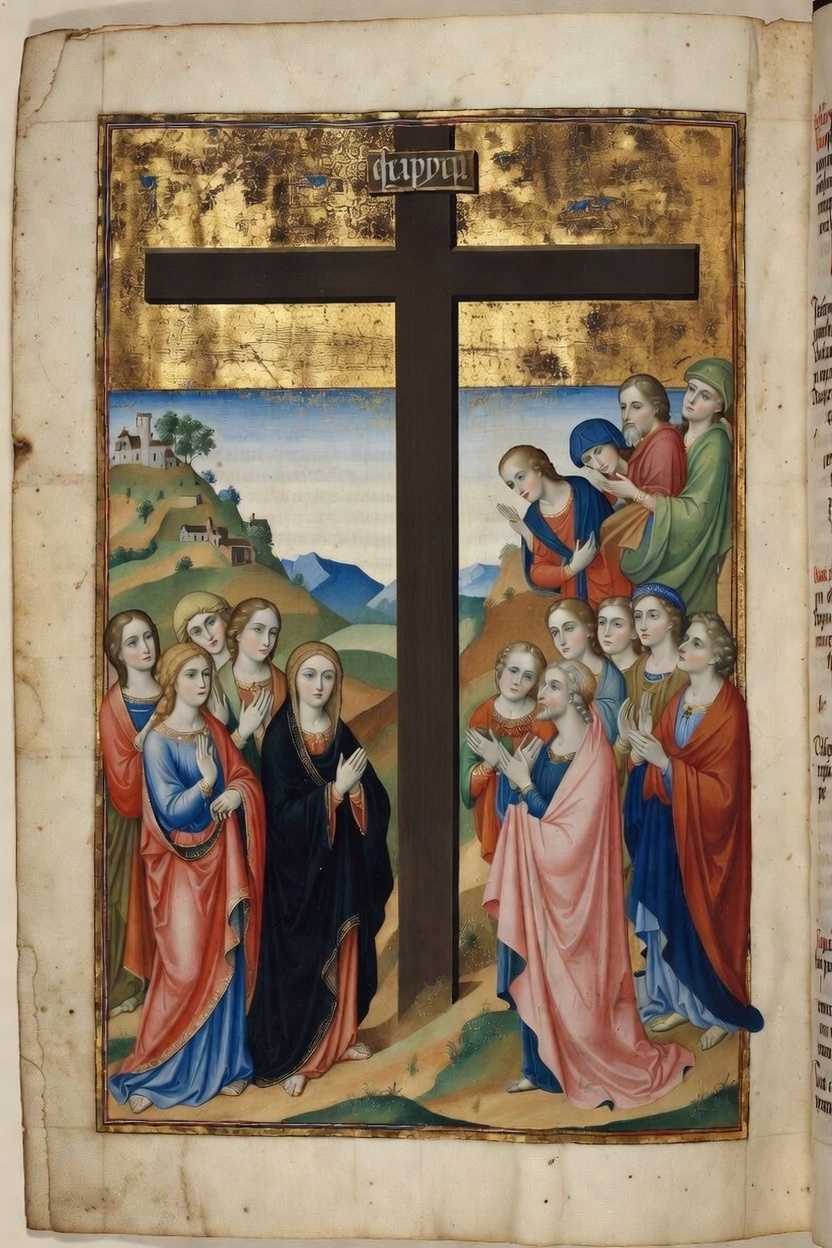
A Study of John 12:27-36
“”Now is my soul troubled. And what shall I say? ‘Father, save me from this hour’? But for this purpose I have come to this hour. Father, glorify your name.” Then a voice came from heaven: “I have glorified it, and I will glorify it again.” The crowd that stood there and heard it said that it had thundered. Others said, “An angel has spoken to him.” Jesus answered, “This voice has come for your sake, not mine. Now is the judgment of this world; now will the ruler of this world be cast out. And I, when I am lifted up from the earth, will draw all people to myself.” He said this to show by what kind of death he was going to die. So the crowd answered him, “We have heard from the Law that the Christ remains forever. How can you say that the Son of Man must be lifted up? Who is this Son of Man?” So Jesus said to them, “The light is among you for a little while longer. Walk while you have the light, lest darkness overtake you. The one who walks in the darkness does not know where he is going. While you have the light, believe in the light, that you may become sons of light.” When Jesus had said these things, he departed and hid himself from them.”
John 12:27-36 ESV
Observation/Summary (short explanation of what the passage says in your own words):
After declaring the hour for Him to be glorified had come in the previous verse, Jesus then said, “Now is my soul troubled. And what shall I say? ‘Father, save me from this hour’? But for this purpose I have come to this hour. Father, glorify your name.”. Next, a voice from Heaven said, “I have glorified it, and I will glorify it again.” There was a crowd who heard this and some said it thundered, but others said an angel had spoken to Jesus. Then Jesus told them the voice spoke for their sake and not for His. Also that the judgment of this world had come, the ruler of this world would be cast out, and when He (Jesus) was lifted up from the earth, He would draw all people to Himself. Jesus said this to explain what kind of death He would die.
The crowd responded by saying they heard from Scripture that the Christ remains forever, and then asked how Jesus could say the Son of Man must be lifted up, and also who the Son of Man is. In response to this Jesus told them, “The light is among you for a little while longer. Walk while you have the light, lest darkness overtake you. The one who walks in the darkness does not know where he is going. While you have the light, believe in the light, that you may become sons of light.” After Jesus said all this, He left and hid Himself from them.
Textual Analysis and Implication (what is being said and what does this mean?):
In the previous verses Jesus said the hour for Him to be glorified (die and be resurrected) had come, those who hate their life in this world would gain it for eternal life, and those who serve Him must follow Him. And now in verse 27 Jesus speaks to how He is feeling about going to the cross by saying, “Now is my soul troubled.” Jesus humbly and bravely accepted the coming of this crucial hour, but He was still greatly troubled about it because He knew what terrible suffering the cross would involve. While John does not record Jesus’ agonized prayer in Gethsemane, the same sentiment is expressed in this verse. While Jesus faced the cross with bold determination, His use of the word “troubled” here shows He experienced intense horror and agony too.
But as Jesus expressed His troubled soul He responded immediately with, “And what shall I say? ‘Father, save me from this hour’?” Jesus’ words “Father save me from this hour?” can be taken as a prayer in line with His prayer in Gethsemane, “Take this cup from me.” (Mark 14:36). This reveals His intense agony, but He immediately follows this prayer up with, “But for this purpose I have come to this hour.”, which is in turn analogous to the other part of His Gethsemane prayer, “Not my will but yours be done.” (Mark 14:36). Just as He did in Gethsemane, as soon as Jesus expressed His agony of soul and prayed to be delivered from the coming hour, He expressed His commitment to submit to the Father’s will and go to the cross. In this we see Him model how we are to follow Him through the brokenness of this world; praying to be delivered from trouble but elevating the will of the Father over our own, and going forward in the confidence that Jesus will be with us and will carry us through.
Next, Jesus concluded by saying, “Father, glorify your name.”, providing us with yet more of an example to follow. As Jesus contemplated the coming cross, He elevated the glory of God the Father above His own preference. In this Jesus exemplifies what it means to hate one’s own life (John 12:25); it is to surrender our own will and obey the will of God, even unto death. But this is not merely a path of self-denial, it is the replacement of love for ourselves with a passionate love for God and an urgent desire to glorify Him.
In response to Jesus’ prayer a voice from Heaven said, “I have glorified it, and I will glorify it again.”. This was the third time an audible voice from Heaven, confirming Jesus’ divine status as the Son of God, was heard. The first two times were at His baptism and transfiguration. The Father “had glorified” His name during Jesus’ earthly ministry, and “would glorify” it yet further through Jesus’ death on the cross and resurrection. As Jesus was on His way to the cross, and in great agony over it, the Father responded from Heaven with assurance that He had been glorified and would continue to be in even greater measure.
After this voice was heard, some in the crowd said it had thundered, and others said an angel had spoken, but Jesus said, “This voice has come for your sake, not mine.” Apparently not everyone understood the voice, or at least they didn’t believe their ears. And while some attributed the voice to an angel, Jesus’ prayer to the Father in verse 28 makes it clear this was a direct response from the Father. While Jesus said the voice came for the benefit of the listening crowd that does not mean it meant nothing to Him. It was no doubt a comfort as He agonized over the coming horror of the cross, but He was already determined to obey the Father’s will. That being said, His words tell us the voice spoke much more for the benefit of the listening crowd than for His. And we can discern the benefit to the crowd in a few ways.
First, even though the voice from Heaven was not entirely understood by all the bystanders, it would have been of great benefit to the disciples as they went through the ordeal of Jesus’ arrest and crucifixion. And after the resurrection the memory of this voice from Heaven would have served to confirm yet further Jesus’ claim to divinity, and that the cross was not a defeat, but the ultimate victory over sin and death, and therefore Jesus’ glorification. Also, while the bystanders did not fully understand what they heard, the fact that a Heavenly voice spoke in response to Jesus would have served to alert those who had any spiritual discernment at all that something important in terms of redemptive history was happening. Furthermore, the incident will also give Jesus’ words in the following verses more weight and impact.
In verses 31-32 Jesus went on to say “Now is the judgment of this world; now will the ruler of this world be cast out. And I, when I am lifted up from the earth, will draw all people to myself.”, and in verse 33 the gospel writer adds the explanative, “He said this to show by what kind of death he was going to die.”. The “world” in this instance can be defined as culture opposed to Jesus, and on the cross not only was the world judged/defeated, but the ruler of this world, Satan, was defeated and cast out. The fallen world is led by Satan. Satan is not a name, it is a title meaning “The Adversary.” In fact, Satan is never named in the pages of Scripture, but he is identified as the adversary of God who leads the world in rebellion against God.
While Satan and his forces of evil are still active in the world, in an important way he was cast out by Jesus’ victory on the cross because he does not have any authority over the people of God. In the garden of Eden, mankind disobeyed God and submitted to Satan, the ruler of this fallen world, but now because of Jesus’ perfect obedience and sacrifice, all who submit to the rule of Jesus are set free from slavery to Satan, sin and death. And Colossians 2:14-15 powerfully describes Jesus’ victory over Satan saying, “by canceling the record of debt that stood against us with its legal demands. This he set aside, nailing it to the cross. He disarmed the rulers and authorities and put them to open shame, by triumphing over them in him.” While the final, consummating step in the defeat of Satan and the world is yet to be taken, Jesus’ triumph on the cross was a pivotal moment in the arc of redemptive history that will lead to the dawning of a new age with the triumphant return of Christ foretold in Revelation.
This tells us there is a real spiritual conflict beyond our perception taking place, and Jesus totally defeated the enemy with His triumph in the crucifixion. And now, God is graciously holding back the final advance of His kingdom to allow more time to save more people in this fallen world, but one day Jesus will return to finally and fully do away with Satan, sin and death forever. But this means all who reject Christ, and therefore choose to submit to the ruler of this fallen world will be judged and condemned along with him. So, while we live on this fallen world for a short while before going to our Heavenly home, we have been given the task of taking part in God’s rescue mission to share the truth of the gospel and love of Christ with others so they too might be saved.
Next, when Jesus said, “lifted up from the earth,” He meant the word “lifted” in two ways. The first speaks to Him being elevated on the cross, and the second speaks to His exaltation on the cross and to His throne. It was by this elevation to pay for the sin of mankind and exaltation on the cross and to His throne that Jesus draws all people to Himself. On the cross He paid for mankind’s sin, and now from His throne He rules with power and works to draw sinners to Himself so that we can be saved. Importantly Jesus also says “all peoples” will be drawn to Him. He came first to the Jews, but He did not come only to save the Jewish people, but rather, people from every ethnicity in the world. And again, as Jesus said this, John the gospel writer adds that Jesus was indicating the kind of death He would soon face. Jesus knew He would be crucified to accomplish this work, and even though He was in agony over the coming horror, He still obeyed the will of God the Father.
In response to Jesus, the crowd said, “We have heard from the Law that the Christ remains forever. How can you say that the Son of Man must be lifted up? Who is this Son of Man?”. The crowd was rightly able to connect the “Son of Man” title with the “Messiah” (Christ means Messiah in Greek), and they also rightly understood Jesus was referring to Himself and speaking of His death by use of the words “lifted up”, so, they essentially asked, “How can this be? Isn’t the Messiah supposed to live and reign forever?”.
At this time as Messianic expectations ran high, the people recalled passages such as Isaiah 9:7 that promised the Messiah from the line of David would be established as king forever. And with this and other such passages in mind they expected the coming Messiah to triumph over the Roman occupiers and begin an eternal reign on Earth centered in Israel. At this point they had not connected other portions of Scripture, such as Isaiah 53, that also spoke of the Messiah as a suffering servant who would die for the sin of the people, and because of this the people wanted to know how Jesus could both claim to be the Messiah and that He would die.
Jesus did not answer their question but instead said, “The light is among you for a little while longer. Walk while you have the light, lest darkness overtake you. The one who walks in the darkness does not know where he is going. While you have the light, believe in the light, that you may become sons of light.”. Throughout this gospel Jesus is recorded as having already spoken of His divinity and eternal reign, and that those who believe in Him would receive eternal life. So, rather than refer to these things again, at this moment He reaffirms that He will soon die and depart from the people by saying the light would only be with them for a little while longer, and also encourages them to walk in the light while the light is still with them. When Jesus goes to the cross, He will die and leave them, and then darkness will come.
Importantly, they are told to walk in the light while they have it so that darkness does not overtake them. While the darkness will come, those who walk in the light will become sons of the light, and even though darkness comes, it will not overtake or “overcome” them. This language is reminiscent of John 1:5 which says of Jesus, “The light shines in the darkness, and the darkness has not overcome it.”. The light and dark contrast is made elsewhere in John’s gospel too and it reflects the Hebrew idiom wherein light is used to describe godly qualities. The one who believes in and follows Jesus can be considered a disciple of the light or a child of the light. Jesus encouraged this crowd to believe in Him and become children of the light before He went to the cross, because He, the light of the world, would soon be taken from them, and it would not get any easier to believe in Him after He went away.
Lastly for this section of John 12 we read that, “When Jesus had said these things, he departed and hid himself from them.”. This disappearance from the crowd and hiding away is similar to when Jesus slipped away in John 8:59 except here it is a little different. Earlier, an angry crowd had been about to stone Him, and Jesus slipped away because His hour had not yet come. But now we find Jesus at the end of His earthly ministry when He knows the hour of His death would soon arrive, but He slips away here as a sort of acting out of the judgment He had just proclaimed. Soon, after His exaltation/glorification on the cross, He would depart from them in a greater sense, but here His hiding away provides a lived out parable which the John the gospel writer saw fit to record following the warning Jesus just gave the people.
Response (How does this change how I think, act and pray?):
In this passage we see the humanity of Jesus as He agonized over the coming horror of the cross. Jesus is fully God and fully human, but His divinity did not mean the cross meant nothing to Him or that it was easy. In the horrible physical suffering Jesus bore the unfathomable weight of God’s wrath for the sin of the whole world and was forsaken by the Father as He hung on the cross. In seeing Jesus’ willingness and determination to obey the Father in the face of such terrible suffering, we also gain a better view of how much He loves us. So, this passage provides not only an example of selfless obedience for us to follow, but also yet more reason to follow Jesus in this path of self-denial out of loving loyalty to Him.
We also learn something of the unseen spiritual battle that is taking place. Jesus defeated the evil kingdom of this world that is led by Satan with His death on the cross, and proved it with His resurrection. This tells us there is unseen, spiritual evil at work in the world, but Jesus has overcome the forces of darkness and we have no reason to fear them. Christ’s kingdom is advancing in the hearts of people around the world as they come to faith and one day Jesus will return to fully and finally do away with evil, sin and death forever. He will establish a new heaven and new earth where all who trust in Him will live in fullness of joy and pleasure forever.
With this in mind we should endeavor, in reliance on God’s Spirit in us, to serve faithfully and obey the will of God for our short time in this world, and take part in His divine rescue mission to save and redeem other sinners like us. We who have believed in the light and have become sons of light must make use of the opportunity we have been given to be about our Father’s business in loving the people around us and faithfully declaring the truth of the gospel whenever we have an opportunity to do so, no matter the cost. We have an eternal inheritance and citizenship in God’s kingdom that no power of this world can take away.
Self Reflection:
- Is there any suffering in my life that I am currently agonizing over?
- How does the agony of Jesus comfort me, knowing that He can personally identify with my suffering?
- How does Jesus triumph over evil on the cross, and my place in His eternal kingdom, give me hope in the difficulty of my present circumstances?
 Home
Home 
Leave a comment