
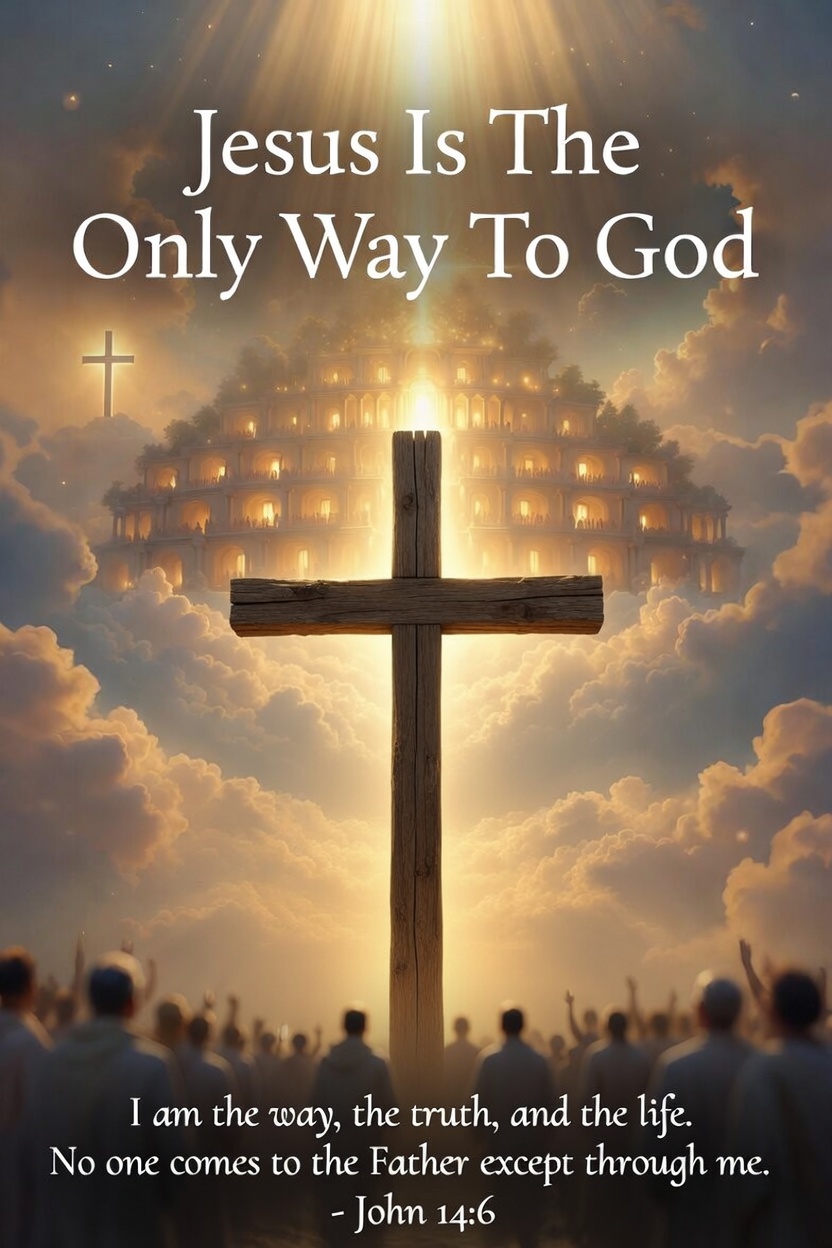
A Study of John 14:1-7
“Let not your hearts be troubled. Believe in God; believe also in me. In my Father’s house are many rooms. If it were not so, would I have told you that I go to prepare a place for you? And if I go and prepare a place for you, I will come again and will take you to myself, that where I am you may be also. And you know the way to where I am going.” Thomas said to him, “Lord, we do not know where you are going. How can we know the way?” Jesus said to him, “I am the way, and the truth, and the life. No one comes to the Father except through me. If you had known me, you would have known my Father also. From now on you do know him and have seen him.”
John 14:1-7 ESV
Observation/Summary (short explanation of what the passage says in your own words):
Jesus told His disciples not to be troubled, but to believe in God and in Him. In His Father’s house there are many rooms, this is why Jesus said He was leaving to prepare a place for them. And because He is going to prepare a place for them He will come back one day and take His followers to the place He has prepared so they can be with Him. Then He said to the disciples, “And you know the way to where I am going.”
But Thomas told Jesus they didn’t know where He was going and asked how they could know the way. And Jesus replied, “I am the way, and the truth, and the life. No one comes to the Father except through me. If you had known me, you would have known my Father also. From now on you do know him and have seen him.”
Textual Analysis and Implication (what is being said and what does this mean?):
John chapter 14 begins with Jesus telling the disciples, “Let not your hearts be troubled. Believe in God; believe also in me.” Although Jesus is the one heading to the cross and He has already expressed that He Himself is troubled in heart and spirit (John 12:27, 13:21), it is Jesus Who comforts the disciples. The disciples were also troubled because just prior to this Jesus informed them one of them would betray Him, Peter would deny Him, and that He would be leaving them that night. Even though Jesus was greatly troubled knowing He was going to the cross, He lovingly comforted the disciples with yet more instruction and emotional/spiritual support. Jesus does not want His followers to be troubled; He wants to comfort us.
In this same verse Jesus also tells them how to quiet their troubled hearts, “Believe in God; believe also in me.” The verb for “believe” (pisteuo) can also rightly be translated as “trust.” Commentators debate over the grammatical particulars of how exactly to take the verb, but they all agree this verb assumes what is known as a “high Christology” because it presents Jesus as an object of faith equal with God the Father. Jesus is not a lesser god, He is not a man Who became God or anything like that. Jesus is God the Son; the uncreated God in the flesh. He is to be trusted as God is trusted because He is God. God the Son and God the Father are one. This separates Jesus from all other religious teachers. He did not merely teach about the Father’s love, morality, goodness and justice, but rather, in addition to doing so He claimed to speak the very words of God, to perform the very acts of God, and commanded His followers to, “Believe in me.” Comfort, hope and peace in times of trouble are found through faith in Jesus, the eternally existent God of all creation.
Next, in verses 2-3, Jesus said, “In my Father’s house are many rooms. If it were not so, would I have told you that I go to prepare a place for you? And if I go and prepare a place for you, I will come again and will take you to myself, that where I am you may be also.” Here Jesus gives the disciples a reason for His leaving them and also why they should be comforted. His departure will be for their good. While Jesus is leaving, He is going to prepare a place for them, and He will also return to take them to dwell with Him. In these chapters Jesus uses the phrases “coming back” and “being with” His disciples to refer to different things, but here it is clear He is speaking of His second coming at the end of the age when He gathers His followers to live with Him forever. While all believers are immediately with the Lord after death, there is a sense in which the ultimate fulfillment of this promise comes with Jesus’ second coming when Heaven comes to earth and His followers receive their resurrected bodies.
The Greek word (mone) translated in the ESV as “rooms” has also been translated in the past as “mansions.” Heaven is what Jesus is talking about here and because He describes it as His Father’s “house,” the best understanding of the word is “rooms” or “dwelling places” inside of a house. What this communicates is that in Heaven God has prepared many dwelling places for His billions of followers to live in forever with Him and each other as one big family.
Also, the words “I am going there to prepare a place for you.” tell us this place already exists prior to Jesus going there. And it is not that once Jesus gets there He will start preparing the place for us who follow Him, but rather, it is His act of going to the cross and rising from the dead that prepares this place for us. After having gone through the horror of the cross and making it possible for us to come to this place, He will also of course return and take us to be with Him where He is. While this does speak to the end of the age and Jesus’ return to make a new heavens and earth, the primary focus is on providing followers of Jesus with an encouraging message of the comfort and joy we will enjoy in God’s presence forever.
In verse 4 Jesus concludes this statement with, “And you know the way to where I am going.” Even though Jesus says the disciples know the way to where He is going, the very next verse will show they do not know that they actually do know the way. John does not insert this statement here to show Jesus made some sort of mistake in His assessment of their understanding, but to illustrate that because they know Jesus they know the way to where He is going, because Jesus is Himself the Way (John 14:6).
As was just mentioned, in verse 5 Thomas said, “Lord, we do not know where you are going. How can we know the way?”. Throughout John’s gospel Thomas is portrayed as a loyal and courageous disciple willing to follow Jesus even to death (John 11:16), but also as a disciple who wrestled with doubts and confusion (John 20:24-25). His words here show he (mis)understood Jesus’ statement in purely natural terms. He thought Jesus was merely travelling to another earthly location or city and questioned how they could possibly know the way there without knowing the location. However, Jesus did just tell them the location (vs. 2-3) and that they knew the way (vs. 4). While this is true, Thomas’ question makes it clear he and the other disciples had not yet grasped the meaning of Jesus’ words.
So, in response to Thomas’ sincere inquiry Jesus said, in verse 6, “I am the way, and the truth, and the life. No one comes to the Father except through me.” Notice, Jesus did not claim to “show” the way, He said I “am” the way. He did not claim to merely “reveal” the truth, He said I “am” the truth. And He did not propose to simply illuminate the secret of life, He said I “am” the life. Jesus is the one and only way to God because He is the exclusive and absolute truth of God. Jesus is the truth of God because He is God’s Word incarnate; the embodiment of God in the flesh. Everything He does and says is exactly what the Father wants Him to do and say because He and the Father are one and the same Being. Jesus is the life because He is God; He is the eternally existent, uncreated source of all life and Creator of all things. Because Jesus is the way, truth and life, Jesus and only Jesus is the way to God and life eternal.
For this reason in His answer to Thomas’ question Jesus does not provide a spiritual path of rites to follow in order to obtain a place in the Father’s house. Jesus Himself is the Way. He is the Savior (John 4:42), the Lamb of God Who takes away the sin of the world (John 1:29, 34), and the One Who speaks and causes the dead to rise from their graves (John 5:28-29, 11:43-44). And as such He also says, “No one comes to the Father except through me.” This exclusive claim does not allow for the idea that Christianity is one of many religions that leads to God.
Many people are happy to acknowledge Jesus as a good teacher or prophet but not that He is God and that the only way to have a relationship with God is through faith in Him. But these words from Jesus make such an idea impossible. Here and elsewhere Jesus clearly claimed to be God and the only way to eternal life. If what He said is not true He cannot possibly be a good teacher or prophet. This claim from Jesus leaves us with only three possibilities: Jesus is either a liar, a lunatic, or the Messiah, a.k.a. The Son of God, God incarnate. I believe His deeds and actions rule out any possibility of Him being considered a liar or insane therefore He must be and is God in the flesh. His words which say belief in Him is the only way to God the Father and salvation must be taken seriously. Jesus and only Jesus is the way, truth and life, and “no one” comes to the Father except through Him. There is only one path to God; belief in Jesus, and every other religion in the world is simply a different lane on the same wide road that leads away from God and to eternal destruction.
An often cited passage from “The Imitation of Christ” by Thomas a Kempis captures this claim well, “Follow thou me. I am the way and the truth and the life. Without the way there is no going; without the truth there is no knowing; without the life there is no living. I am the way which thou must follow; the truth which thou must believe; the life for which thou must hope. I am the inviolable way; the infallible truth, the never-ending life. I am the straightest way; the sovereign truth; life true, life blessed, life uncreated.”
Lastly for this first section of John 14, in verse 7 Jesus said, “If you had known me, you would have known my Father also. From now on you do know him and have seen him.” What Jesus wants the disciples to understand is that in coming to know Him, they have also come to know the Father. Here Jesus explains why He is the only way to God. Jesus is God incarnate and as such He is the perfect representation of God. Therefore to know Jesus is to know God, and to see Jesus is to see God. The words “From now on”, in the second part of this statement indicate the disciples had begun to know Jesus, but they are about to learn much more about Him. As they witness Jesus’ imminent death and resurrection they will come to know Him even better as His death and resurrection are the ultimate display of God’s love and power.
Response (How does this change how I think, act and pray?):
Firstly, from this passage we learn God does not want us to be troubled. We live in a fallen world where trouble will come our way, but Jesus, our God Who suffered and endured much trouble for us, offers precious words of comfort to encourage us in times of trouble. Jesus told us to believe in God and Him, and in so doing told us that to believe in Him is to believe in God. Then He also gave the comforting promise that He has prepared a place for us in Heaven to dwell with Him forever. At the end of this short road full of trouble in this world, the splendor of God’s kingdom awaits. God wants a family, and all who repent of sin and trust in Jesus as Lord and Savior are welcomed into His royal family and allotted a place in paradise. To cleanse us of our sin and prepare this place for us, our loving God Jesus willingly died on a cross for us in our place. Having done so He will most assuredly take us to be with Him just as He has promised.
Next, He told us the “way to where [He] is going.” Jesus is the Way, and the Truth and the Life. Jesus and only Jesus is the way to God and eternal life. He is not one path among many that leads to God. Believing loyalty in Jesus is the only way to God. To know Jesus is to know God. To reject Jesus is to reject God. Our loving God Jesus wants us to live with Him forever in the paradise He has prepared for us, but we must believe in Him and only Him as our Lord God and Savior.
Self Reflection:
- Could Jesus have wrongly claimed to be God and still be considered a good teacher or prophet? Can a good teacher or true prophet also be a liar or insane? Jesus was clearly not a liar or insane therefore He must be God.
- How does Jesus’ promise of a place prepared for me in Heaven forever give me a joyful, hope filled and eternal perspective of life in the middle of difficulties now?
- What does Jesus’ willingness to endure the cross to restore me to relationship with Him tell me about the magnitude of His love for me?


Leave a Reply