
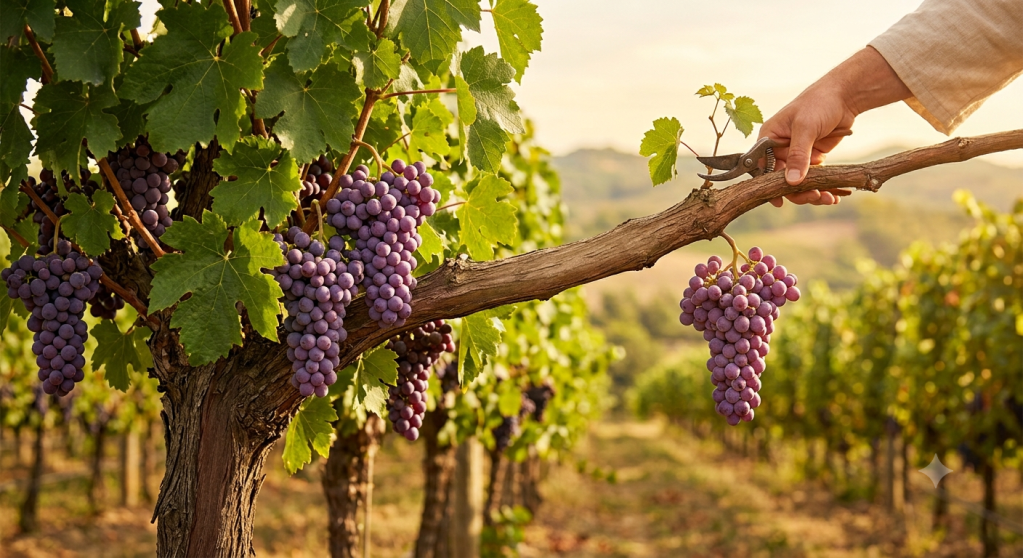
A Study of John 15:1-11
“I am the true vine, and my Father is the vinedresser. Every branch in me that does not bear fruit he takes away, and every branch that does bear fruit he prunes, that it may bear more fruit. Already you are clean because of the word that I have spoken to you. Abide in me, and I in you. As the branch cannot bear fruit by itself, unless it abides in the vine, neither can you, unless you abide in me. I am the vine; you are the branches. Whoever abides in me and I in him, he it is that bears much fruit, for apart from me you can do nothing. If anyone does not abide in me he is thrown away like a branch and withers; and the branches are gathered, thrown into the fire, and burned. If you abide in me, and my words abide in you, ask whatever you wish, and it will be done for you. By this my Father is glorified, that you bear much fruit and so prove to be my disciples. As the Father has loved me, so have I loved you. Abide in my love. If you keep my commandments, you will abide in my love, just as I have kept my Father’s commandments and abide in his love. These things I have spoken to you, that my joy may be in you, and that your joy may be full.”
John 15:1-11 ESV
Observation/Summary (short explanation of what the passage says in your own words):
Jesus is the true vine and the Father is the vinedresser. The Father takes away every branch in Jesus that does not bear fruit, and all those that do bear fruit, He prunes so they will bear more fruit. Jesus then said the disciples were already clean because of the word He had spoken to them, but also told them to abide in Him and He would abide in them. As a branch cannot bear fruit on its own unless it remains in the vine, neither could the disciples unless they continued to abide in Jesus. Jesus is the vine and His followers are the branches. Those who abide in Him and He in them bear much fruit, because apart from Jesus they can do nothing. Anyone who does not abide in Jesus is thrown away like a dead branch and withers. And all such branches are gathered, put into the fire and burned.
Those who abide in Jesus and have His words abiding in them may ask whatever they wish and it will be done for them. When Jesus’ followers bear much fruit and in so doing prove to be His disciples, the Father is glorified. Jesus also loves His disciples just as the Father loves Him, and He told His disciples to abide in His love. Those who keep His commandments will abide in His love in the same way Jesus kept the Father’s commands and abides in His love. Jesus said all these things to the disciples so His joy would be in them and their joy would be full.
Textual Analysis and Implication (what is being said and what does this mean?):
At the beginning of John 15, Jesus says, “I am the true vine and my Father is the vinedresser.” Jesus makes several famous “I am” statements in John’s gospel and this is the last of them. The image of the vine was a common one not only in ancient Israel, but also throughout the ancient world. Here though, John’s many references to the Old Testament (OT) make it clear this vine reference has an OT background. In the OT the vine is frequently used as a symbol for the nation of Israel, God’s covenant people (Ps. 80:9–16; Is. 5:1–7; 27:2; Je. 2:21; 12:10; Ezk. 15:1–8; 17:1–21; 19:10–14; Ho. 10:1–2). When these passages describe Israel as a vine they also go on to say Israel failed to produce good fruit and thus incurred God’s judgement. But now, in contrast to Israel’s failure, Jesus describes Himself as the “true vine,” in other words, the One Who Israel only foreshadowed and that produces good fruit.
This means the true vine is not the unfaithful people of God, but Jesus Himself, and all those who follow Him are joined to Him as branches connected to the vine. This image would have been very impactful for the Jewish people, and its meaning for all people is that anyone who wants to be a part of God’s vine, His chosen people, must be rightly connected to Jesus through faith in Him. This imagery describes mutual indwelling, fruitfulness, and incorporation into God Himself wherein one retains their unique self but also becomes a part of a greater, unified whole.
Importantly, God the Father is also described as the “vinedresser,” or some translations also rightly say “gardener.” In Psalm 80 God is described as the vinedresser Who plants and cultivates the vine. God fulfills both the role of vine and vinedresser for all believers under the new covenant and all believers have a relationship with both the vine (God the Son) and the vinedresser (God the Father).
Next, in verse 2, speaking of the Vinedresser, Jesus said, “Every branch in me that does not bear fruit he takes away, and every branch that does bear fruit he prunes, that it may bear more fruit.” Jesus already presented the concept of mutual indwelling for the believer in chapter 14 with words such as “you in Me, and I in you,” and here He continues with this concept using vine imagery. Jesus is the Vine and His followers are the branches. Branches receive life and are sustained by the vine, and the vine in turn produces fruit through the branches.
One role of the Father (the Vinedresser) is to prune every branch that bears fruit so it will bear more fruit. No fruit bearing branch can escape the need for pruning; all must be pruned. But the Father’s intention in this pruning is loving even though pruning may be painful. This image brings to mind Hebrews 12:4-11 where it is explained God treats us who follow Him as His children, and out of love for His children He disciplines us. Discipline may be unpleasant in the moment but in the end it produces, “the peaceful fruit of righteousness to those who have been trained by it.” and it is “for our good, that we may share his holiness.”.
This is not all the Vinedresser does though. He also “takes away” or “cuts off” every branch that does not bear fruit. In other words, as any good vinedresser would, He cuts off the dead wood to protect the healthy fruit bearing branches from rot and disease, and so they may bear fruit and have room to grow. Branches that do not bear fruit show they are not properly connected to the vine, and this is a picture of apostate Christians who are not true believers connected to Jesus through faith. True believers will always bear fruit because they are connected to Jesus. This fruit will look different and come in different quantities and qualities in different people, but the fact remains that branches (believers) connected to the Vine (Jesus) will bear fruit.
Then, in verse 3, Jesus said, “Already you are clean because of the word that I have spoken to you.” Earlier in the evening, in John 13:19, Jesus spoke of how there is an initial cleansing for His followers, and then an ongoing cleansing. Now, He repeats this idea and connects the cleansing power of His word with the metaphor of Him as the life giving Vine. By “word” Jesus means His teaching. All that Jesus teaches, and all that Jesus is and does acts in the life of the believer to cleanse us of sin, by convicting us of the sin in our lives, condemning it, leading us to repent of it, and then helps us to grow in holiness and the fruit of the Spirit. As the word of Jesus is applied in the lives of His followers, His teaching acts as a cleansing and pruning agent to refine and purify us for further service and to bear much fruit.
In verse 4 Jesus continued on to say, “Abide in me, and I in you. As the branch cannot bear fruit by itself, unless it abides in the vine, neither can you, unless you abide in me.” No branch separated from the vine has life in itself, and no disciple separated from Christ can live on and bear fruit. In order to live on, grow and produce fruit we must be connected to the life giving Vine. To make it abundantly clear Jesus was speaking about Himself and we who follow Him, He directly spoke to His listeners saying, “Neither can you (live and bear fruit), unless you abide in me.” This statement implies there is a choice involved. All who would follow Jesus must utterly depend upon Him continually. And as we rely on Jesus for spiritual life, and physical life for that matter, His Spirit in us will sustain us, renew us day by day, and help us to obey Him and bear fruit for our good and His glory.
Jesus continued to explain this metaphor in verses 5-6, saying, “I am the vine; you are the branches. Whoever abides in me and I in him, he it is that bears much fruit, for apart from me you can do nothing. If anyone does not abide in me he is thrown away like a branch and withers; and the branches are gathered, thrown into the fire, and burned.” Here, Jesus reiterates the idea expressed in verses 1-4, but without mention of the Vindresser or pruning to emphasize the two possible outcomes; branches will either bear fruit and remain connected to the vine, or else be thrown away and burned.
This brings up an important question though as to what exactly Jesus means by “fruit.” In light of the fact that Jesus says bear “much fruit,” and in the following verses says this fruit will come about as a result of prayer in His name for the Father’s glory (vs. 7, 8, 16), it is reasonable to conclude Jesus is referring to everything that is produced as a result of effective prayer in His name. This includes obedience to His commands (v. 10), experiencing His joy and peace (vs. 11 and 14:27), love for each other (vs. 12), and faithful witnessing to the world (vs. 16, 27). This list of fruit is not exhaustive, but it covers many areas. The fruit born by Jesus’ followers varies in quantity, quality and type, but it all comes without fail as a result of abiding in Him. In other words, those who maintain believing loyalty to Jesus Christ, i.e. persevere in depending on the Vine (Jesus) through faith in Him will have His life in them and continue to live on and produce fruit.
Importantly though, Jesus also describes what happens to those who do not abide in Him using imagery that clearly speaks of destruction. This language from Jesus echoes the words of the prophet Ezekiel who, when speaking of Israel using vine imagery, said the vine that failed to produce fruit was good for nothing except to be burned (Ezekiel 15:1-8). The fire imagery speaks of judgement and it is clear from this and other passages that Jesus and His apostles spoke of the separation and judgement that will come upon those who persist in unbelief and refuse to abide in Christ (John 5:29, Mt. 13:37-42, 1 John 2:18-19).
Next, in verse 7, Jesus said, “If you abide in me, and my words abide in you, ask whatever you wish, and it will be done for you.” Jesus’ “words” refers to all Jesus said and taught. To have His words abide in us means to take His word into the heart and mind and conform to it such that love for and obedience to Him becomes our normal mode of living. It is not that we cease to ever sin, because as long as we live in this world we will struggle with sin and stumble from time to time. But having been saved from slavery to sin, and connected through faith to Jesus the true Vine, we now possess new spiritual vitality wherein we are dead to sin and alive to Christ. By the power of His Spirit in us, and out of loving loyalty to Him we desire to do His will. And when we do stumble and sin we are enabled to repent, confess our sin to Him and receive His forgiveness. For, “If we confess our sins, he is faithful and just to forgive us our sins and to cleanse us from all unrighteousness.” (1 John 1:9).
Furthermore, Jesus says as we abide in Him and His word abides in us, we will be able to ask whatever we wish and it will be done for us. This means as we grow in obedience to God and in love for Him, our will and desires will grow in conformity to His, and we will be able more and more to ask for things that conform to His will. None of us are perfect and therefore none of us perfectly conform to God’s will, so we will still ask for things and not get them. We may even ask for good things and not get them, but in such times we must remember God always hears our prayers, and He cares for us. He is all-knowing, all-powerful and good. As such, He sees what is coming, knows what is best and will bring about the greatest good. As we make our requests, God will always give us the grace to endure what He allows, and will bring eternal good out of all circumstances.
In verse 8, speaking of this kind of prayer life and abiding dependency on Him, Jesus then said, “By this my Father is glorified, that you bear much fruit and so prove to be my disciples.” The fruit borne by any vine results in the glory, or honor of the vinedresser, and so it is with us who follow Jesus. Disciples who bear fruit, in the spiritual sense, bring glory to the Father. While John’s gospel frequently speaks of the glory of the Son, it also speaks of the Father being glorified in the Son (John. 12:28, 13:31, 14:13, 17:4). It stands to reason then that if Jesus is the Vine, we are the branches, and the Father is the Vinedresser, then the fruit we bear as a result of our abiding in Christ, will result in the glorification of the Father through the Son.
We might also say Jesus glorifies the Father through the fruitfulness of believers. This is important for followers of Jesus to understand. The fruit that comes about from our connection to Jesus through faith, and our obedience to His word is a key component in how Jesus brings glory to the Father. This also leads to the conclusion that a failure to honor the Son is a failure to honor God (John. 5:23). To reject Jesus is to reject God entirely, and a failure to bear fruit as a result of rejecting Jesus not only brings separation from God and fire, but also robs God of the glory that is rightly His. This sobering thought should cause us to examine our own hearts and lives before God, but we should also be cautious of coming to hasty conclusions about the fruit borne by others. As D.A. Carson put it, “Genuine conversion is not measured by the hasty decision but by long-range fruitfulness.” Fruitful spiritual growth takes time. No one attains spiritual maturity over night.
Next, in verses 9-10, Jesus said, “As the Father has loved me, so have I loved you. Abide in my love. If you keep my commandments, you will abide in my love, just as I have kept my Father’s commandments and abide in his love.” In chapters 13-17 the relationship between the Father and the Son is repeatedly presented as an example for the loving relationship between Jesus and His followers. Previously, remaining in the vine was tied to obeying Jesus’ words (vs. 7), and now this same point is explained in a different way.
The vine/branch metaphor has its limitations when it comes to describing the magnificent and intimate love relationship that exists between Jesus and His disciples. So, to explain this better Jesus compares it to the loving relationship He has with the Father. Just as the Father has perfectly loved Jesus from eternity past, Jesus says, “so have I loved you.”. While the Father loves the disciples of Jesus too, Jesus is in a sense the mediation of His love, and this intimate, powerful love can only be described by pointing to the love between the Father and the Son.
Importantly though, Jesus also tells His disciples to “abide” or “remain” in His love. God’s love is a gracious, undeserved gift to us, but here we see that while God’s love is boundless, our continued joyful experience of His love, at least in some part, requires us to respond. It’s not that we earn His love and need to perform to continue to receive His love, but to abide and remain in close, loving relationship with Him, we must respond to Him by accepting His love and our reciprocation of His love is seen in our obedience to Him (John. 14:23-24). This point carries the analogy of the love between the Father and the Son, to the love between the Son and us even further. Just as the Son loves the Father, and therefore obeys His commands, if we truly love the Son, we will obey His commands. Crucially then, obedience does not result “in” love from and for God, it is the result “of” our love for God.
Jesus’ life of obedience to the Father is one of the main themes of John’s gospel (John. 4:34; 5:19; 6:38; 8:29, 55; 10:7-18; 12:27-28; 14:31), and it stands to reason that His followers should follow His example. But again, the foundation of our obedience to Jesus is not fear of punishment or of losing His love. Our obedience is founded on our love for Him. It is also vitally important for us to understand this is not a matter of perfect obedience. None of us perfectly obey Jesus. Jesus provides us with the ultimate, perfect, divine standard, but none of us in our sinful flesh can live up to this standard. Jesus knows we are weak, and as we stumble in sin and repent and confess to Him, He always lovingly forgives us and cleanses us (1 John 1:9). But there is a difference between stumbling, and living in habitual, unrepentant sin. Our lives should not be characterized by habitual, unrepentant sin if we love Jesus.
Lastly for this section of John 15, in verse 11 Jesus said, “These things I have spoken to you, that my joy may be in you, and that your joy may be full.” Jesus previously promised “My peace” (John. 14:27), and exhorted His disciples to remain in “My love” (John. 15:10), and here He promises “My joy”. In case His teaching that love for Him means obeying His commands be misunderstood as bland and joyless, here Jesus says those who love Him and therefore obey His commands will have His joy, and their joy will be full. True joy is not hampered by a life lived in submission to Christ, it is in fact the result of a life lived in submission to Christ. But of course having this joy as we live in a fallen world does not mean we will never experience sadness or heartache.
There is much about life here that will give us legitimate reasons to be upset. But in Jesus we have His peace and joy in the midst of sorrow and one day this joy will be complete and overflowing when all of creation is redeemed. On that day all will fully abide in God’s love and obey His good and righteous commands, and there will be no end to the increase of joy and pleasure in His kingdom forever. And now as we obey Jesus out of love for and loyalty to Him, He gives us His joy; joy that enables us to follow His example, bear much fruit, and continue in obedience, even unto death. For we know death is not the end of life and joy for us who follow Christ; it is the doorway to life eternal and joy complete.
Response (How does this change how I think, act and pray?):
This passage teaches us Jesus is the one and only source of life and that to truly live we must be connected to Him through faith in Him. Not only this, but if we are truly connected to Him by faith there should be evidence of this in our lives seen in spiritual fruit born in His name. None of us are perfect, but there should be evidence of growth in grace and love. Furthermore, on the topic of love, if we truly love Jesus, the fruit of obedience to His commands should be evident in our lives. Again, not that we obey perfectly, but out of love for and loyalty to Christ, our lives must not be characterized by habitual, unrepentant sin, but rather, by obedience to His teaching. As we live in this way we bring glory to God.
It is also vitally important for us to understand the concept of pruning and cutting away. God the Father, as the Vinedresser, will cut off and throw away branches (people) who do not believe and abide in the Vine (Jesus), and He will prune those who do. Pruning, or in other words, discipline, may be unpleasant in the moment, but God disciplines us because He loves us. Because of His great love for us He wants to cleanse us of sin, and help us bear much fruit as we grow in love and obedience. And crucially, this life of loving obedience to God results in overflowing and everlasting joy. This is not fleeting momentary happiness like the world gives. This joy of Jesus is given to us in some measure now to sustain and buoy us amidst the hardship and sorrow of life in a fallen world, and one day this joy will drench us from head to toe when we pass on from this world and enter our Lord’s heavenly kingdom where sin, suffering and sorrow will be no more.
Self Reflection:
- Do I see myself as a branch that will wither and die apart from my connection to Jesus Who is the Creator and Sustainer of all things?
- What does Jesus’ selfless choice to suffer and die on the cross so that I can be given life in Him tell me about His love for me?
- How does His love for me and my love for Him motivate me to obey His commands and trust that His ways lead to eternal and overflowing joy?


Leave a comment