
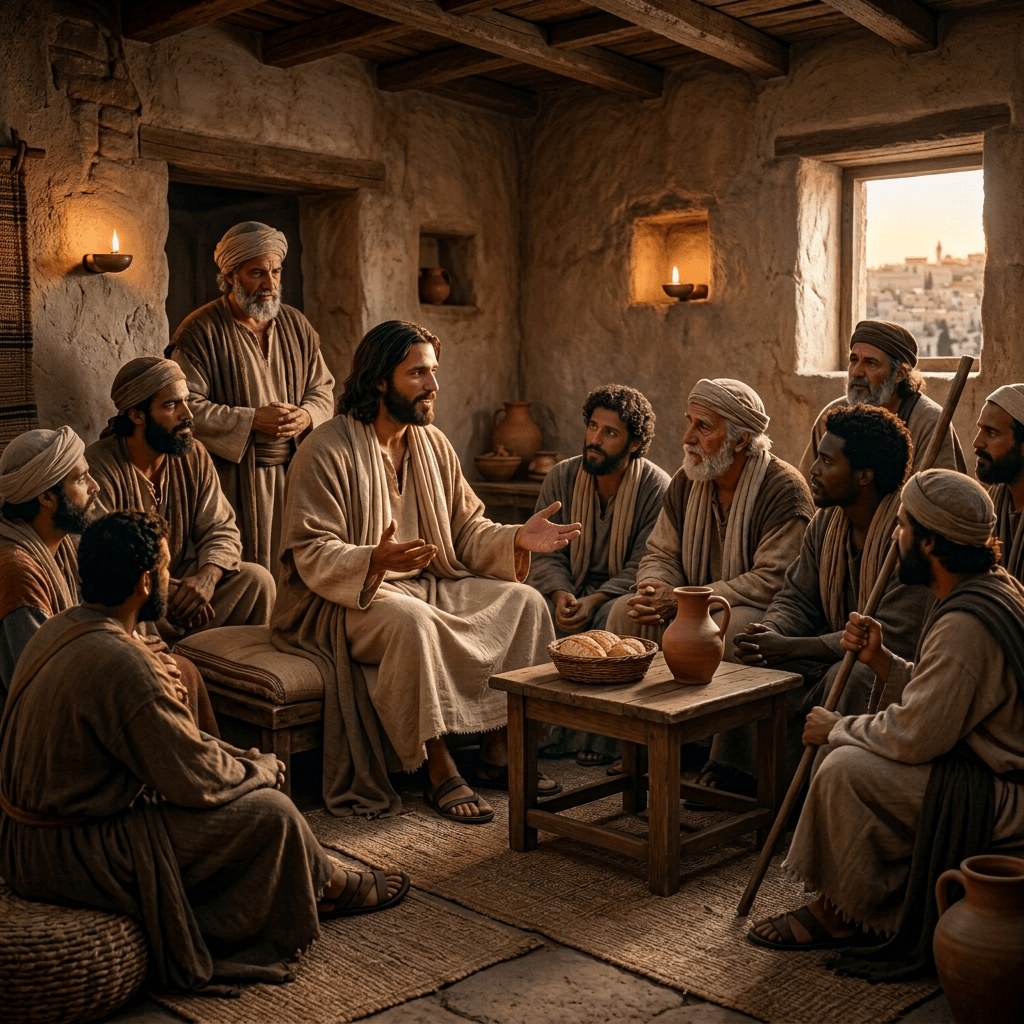
A Study of John 15:12-17
“This is my commandment, that you love one another as I have loved you. Greater love has no one than this, that someone lay down his life for his friends. You are my friends if you do what I command you. No longer do I call you servants, for the servant does not know what his master is doing; but I have called you friends, for all that I have heard from my Father I have made known to you. You did not choose me, but I chose you and appointed you that you should go and bear fruit and that your fruit should abide, so that whatever you ask the Father in my name, he may give it to you. These things I command you, so that you will love one another.”
John 15:12-17 ESV
Observation/Summary (short explanation of what the passage says in your own words):
As Jesus spoke to His disciples He told them His commandment was to love each other as He had loved them. The greatest love someone can have is to lay his life down for his friends. Jesus then said the disciples were his friends if they did what He commanded them. He would no longer call them servants, because the servant does not know what their master is doing; but Jesus called them friends, because He told them all He had heard from His Father.
Jesus also went on to say the disciples did not choose Him, but rather, He chose them and sent them out to bear fruit that would abide so they would receive whatever they asked in the Father’s name. What Jesus commanded the disciples, He commanded so they would love one another.
Textual Analysis and Implication (what is being said and what does this mean?):
As Jesus continued in this final discourse with His disciples before the cross, in verse 12 He said, “This is my commandment, that you love one another as I have loved you.” Jesus gave other commands to His followers, but now as they are still in the upper room, having stood up from the table, Jesus repeats this all important command which all the other commands rest on. The disciples already knew they were commanded to love God with all their heart, mind and strength (Deut. 6:4-5, Mark 2:29-31), so this command to love one another does not do away with the command to love God, but rather, love for God will mean love for God’s Son, and love for God’s Son will lead to obedience to this command to love each other. In other words, love for others does not result in love for or from God. Love for others is the evidence that one has genuine love for God. Furthermore, Jesus’ command to love each other “as I have loved you.”, provides the ultimate standard by which we are to love each other and it sets up what He will say in the next verse.
In verse 13 Jesus continued on to say, “Greater love has no one than this, that someone lay down his life for his friends.” This statement from Jesus speaks both to how His disciples are to love each other, and to His own sacrificial death for all who follow Him i.e. His friends. The disciples may not have fully understood this when they first heard it, but they would come to understand after Jesus’ death and resurrection. As the theologian C.K. Barrett put it, “The eternal divine love reached its complete and unsurpassable expression in the death of Christ, which was at the same time the death of a man for his friends.” This was to be one of the many truths taught by Jesus which the Holy Spirit would bring to the minds of the disciples and help them to better understand (John 14:26). Jesus is the spotless Lamb of God Who willingly and selflessly laid His life down for His friends (John 1:29, 36).
In reading this some have asked if laying down one’s life for an enemy is in fact the greater love. This statement from Jesus does not exclude that. Jesus is not here presenting a contrast between love for enemies and love for friends. In this context Jesus is speaking to a group of friends and believing followers about how to love each other. But Jesus speaks about how to love enemies as well in other contexts such as Matthew 5:43-47. And in Romans 5:8-10 Paul wrote about how God reconciled His enemies to Himself through the death of His Son. With this being how true and greater love is defined, “love has sunk below its proper level if it begins to ask who is my friend and who is my enemy.” (Philip Loyd). Jesus died for us, His friends, and He died for us while we were yet enemies of Him.
Next, in verses 14-15, Jesus said, “You are my friends if you do what I command you. No longer do I call you servants, for the servant does not know what his master is doing; but I have called you friends, for all that I have heard from my Father I have made known to you.” While Jesus died for the world (John 1:29, 34; 3:16), we can also rightly say He died for His friends. And here we have a defining characteristic of who His friends are; His friends obey His commands. Importantly, obedience does not make someone a friend of Jesus, instead obedience is a characteristic of a friend of Jesus. However, before anyone confuses this friendship with the modern idea of a reciprocal friendship we must note that the disciple cannot then say Jesus is their friend if He does whatever they say. That said, if we understand friendship to be defined by how much love someone has for another, then us sinners can find no greater friend than God Who laid His life down for us.
Jesus is not only Savior and Friend, but also the Lord and God of all creation, so to be friends with Him cannot mean that He does whatever we say. Here we learn Jesus’ friends are the object of His love (vs. 13) and obey Him (v. 14). This is how friendship works within a hierarchical structure. We who follow Jesus are His servants, but what distinguishes us as friends instead of just nameless slaves is that in His love for us He also reveals much to us. This is similar to how Moses and Abraham, who were servants of God, are also called “friends of God.” As servants but also friends of God they were granted marvelous access into the plan and purposes of God.
Our God is a King, the King of the universe, and any king rightly requires obedience from his subjects. But again, what separates mere slaves from friends is that friends of a king are also brought into his confidence and told much more about his plans and thinking. They are then enabled to obey with a sense of privilege that comes with knowing their master’s intentions. And this is how it is between us and Jesus.
By calling us “friends”, Jesus’ absolute sovereignty is not reduced in any way, but He also takes us in close to Him and informs us much about His plans. This speaks to the fact that in the past, in the Old Testament, God’s people were far less informed about His plan of salvation, but now under the new covenant He has revealed so much more to us. While, like the disciples at this dinner with Jesus, there is still much we do not know, God the Holy Spirit Who dwells in us helps us to make sense of what Jesus has revealed and to trust Him in the midst of what we still do not know. As friends of Jesus, we have been granted to know and understand more than any follower of God before the new covenant, and in the uncertainty of what we don’t know, we can and will trust in Jesus Christ, our Lord, Savior and Friend.
After this, in verse 16, Jesus said, “You did not choose me, but I chose you and appointed you that you should go and bear fruit and that your fruit should abide, so that whatever you ask the Father in my name, he may give it to you.” In case the disciples were beginning to become prideful in hearing of the privileges they enjoy because of their relationship with God in Christ, Jesus reveals something important for all His followers to understand. No one comes to follow Jesus because they are smarter, better or more worthy. Jesus chooses His followers, we do not choose Him. This speaks to the mysterious combination of God’s sovereignty and our own freewill. God is preeminent in all things and no one can come to believe unless He calls them, and yet the Bible also speaks of how we must choose to repent and believe once we have been called.
Consider two different people Jesus called. Peter was called to follow Jesus, and he did, but the rich, young ruler was also called to sell all he had and follow Jesus, and he did not (Mt. 19:16-22). Both men were called and both made a different choice. What Jesus makes clear here though is that none of us can respond and choose Him unless He first chooses us. The initiative and power to save always lies ultimately with God, but there is also clearly an element of freewill involved on our part as we are held responsible for the choice we make, but again, our choice is subordinate to that of almighty God.
Importantly, Jesus not only says He chose the disciples but also that He “appointed” or in other words, “set [them] apart” to go and bear fruit that will abide. When Jesus talks about His disciples bearing fruit it can refer to different things such as spiritual fruit like love, joy, peace, or growth in obedience to His Word, but here it seems He is referring more specifically to the fruit of bringing others to salvation through faith in Him. While all followers of Jesus are called to share the gospel, some, such as these specific disciples, are called to a focused ministry of evangelism. They were called to bring others to faith in Christ, in other words to bear fruit that will “abide.” This language is a continuation of the vine imagery Jesus spoke of at the beginning of this chapter in John.
Again, while “fruit” can refer broadly to many things, the fruit produced through evangelism and living on mission for Jesus is central. This means these words from Jesus are both a call to His followers to lovingly and boldly declare the gospel to others, and a call to non-believers to come to Him and believe. We are not saved to remain in some kind of “holy huddle;” we are saved and sent to be used by our Lord to save others as well. And as we live on mission for Christ, and ask for help to bear fruit in this mission, what we ask the Father in Jesus’ name will be granted to us when it is in accordance with His will.
Lastly for this section of John 15, in verse 17 Jesus said, “These things I command you, so that you will love one another.” Yet again Jesus commanded His followers to love one another. When He left them (not alone but with the Holy Spirit) they must not turn on one another, but rather, love one another just as He loved them. He would soon provide the ultimate example of love when He died on the cross, and we who follow Him today are also to love each other with this same sort of humble, sacrificial love.
Response (How does this change how I think, act and pray?):
We learn from this passage that Jesus has commanded we who follow Him to love each other as He has loved us. And we know this means a humble, selfless kind of love because of what He has done for us. The greatest love someone can have is to lay their life down for their friends. And we are friends of Jesus if we believe in Him. As His friends we have been brought into a loving relationship with Him and have been granted access to know much about His plans and purposes in the salvation of the world. But also, as His friends and subjects, we obey Him out of love and believing loyalty. This does not make us His friends, but instead it is evidence of our friendship with Him.
But we did not initiate this friendship. It is Jesus Who first came to us and chose us. We were then given the opportunity and ability to respond to Him in faith. Now that we have been chosen and saved by Jesus, we are to bear fruit that abides; in other words as we grow spiritually day by day by the power of the Holy Spirit in us, we are also to proclaim the good news of the gospel so others may come to know Jesus as Lord, Savior and Friend as well. The fruit of redeemed souls is fruit that will remain and flourish forever.
Self Reflection:
- What are some practical ways I can love others, particularly my fellow believers?
- What does Jesus’ humble, self-sacrificing love for me teach me about how to be a friend to others?
- Have I made a habit of praying for opportunities to share the gospel, and that Jesus would bless these opportunities to bear fruit that abides?


Leave a Reply